Seiko Shogun vs Citizen Promaster vs Oris Aquis
Three titanium divers at three price tiers, and a verdict by buyer type.
Last updated
There is a specific kind of buyer who ends up here. You have decided your next watch is a diver, you have decided it is going to be titanium, and now you are staring at a shortlist that refuses to sort itself out. Steel divers are easy: there are a thousand of them and they mostly blur together. Titanium narrows the field fast, and once you set a realistic budget it narrows to something like these three.
These three get cross-shopped constantly, because each answers the same brief in a completely different way. The Citizen is a set-it-and-forget-it tool, the Seiko is a mechanical purist watch, and the Oris is about as close to luxury as you get before prices go vertical. They sit at $575, $1,500 and $2,800, which is roughly a doubling at each step and part of why the decision is hard.
The hard specs below are pulled live from the Titanium Field Guide catalog entries for each reference, every one carrying a High confidence rating, verified against maker listings as of mid-2026. Where the catalog leaves a field unstated we show a dash rather than guess. The scorecard then normalizes the measurable specs into a buyer-benefit score, and the rounds that follow weigh the things a spec sheet cannot.
The spec sheet, side by side
Pulled live from the Titanium Field Guide catalog entries. A dash marks a field the guide leaves unstated rather than guesses.
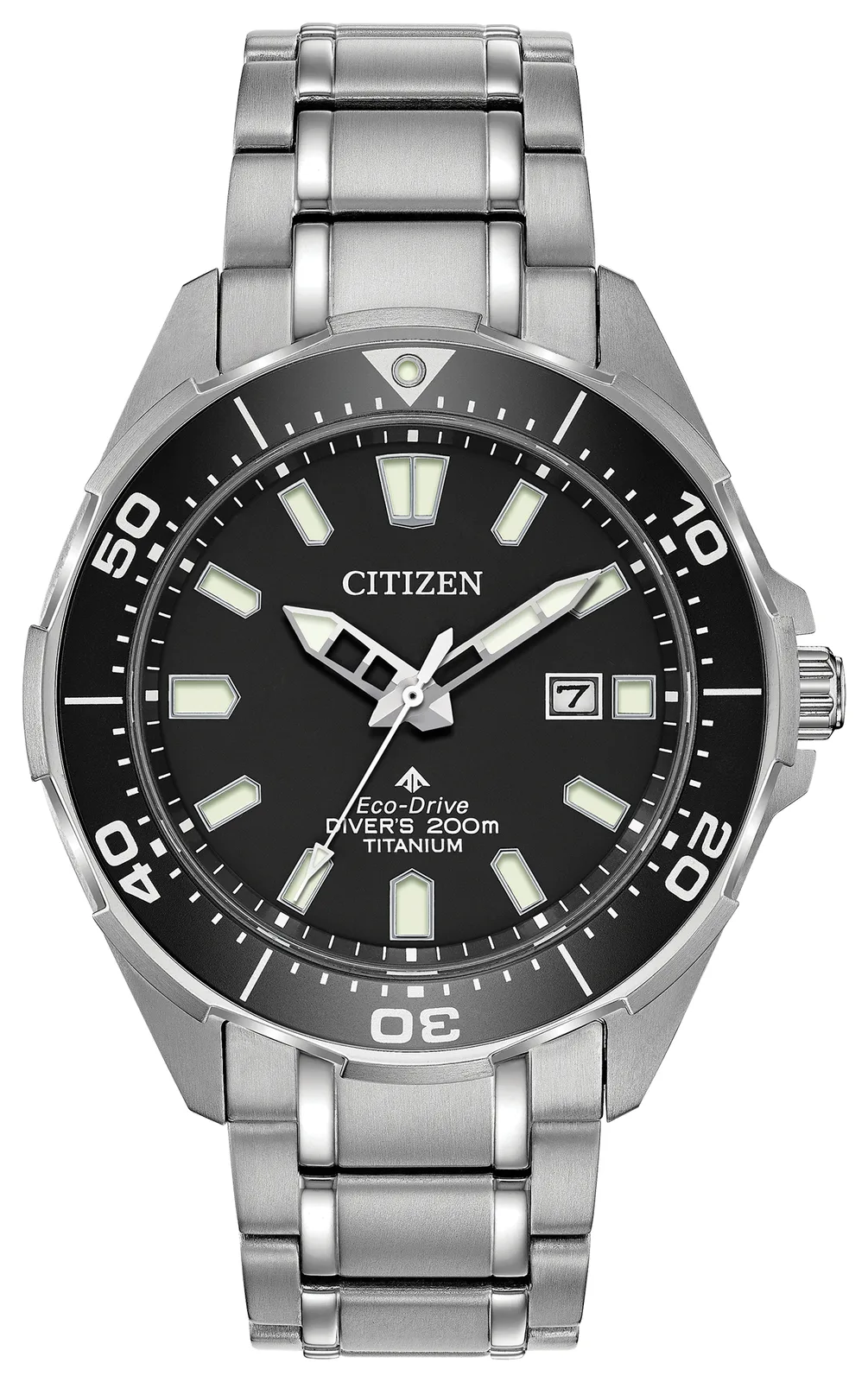
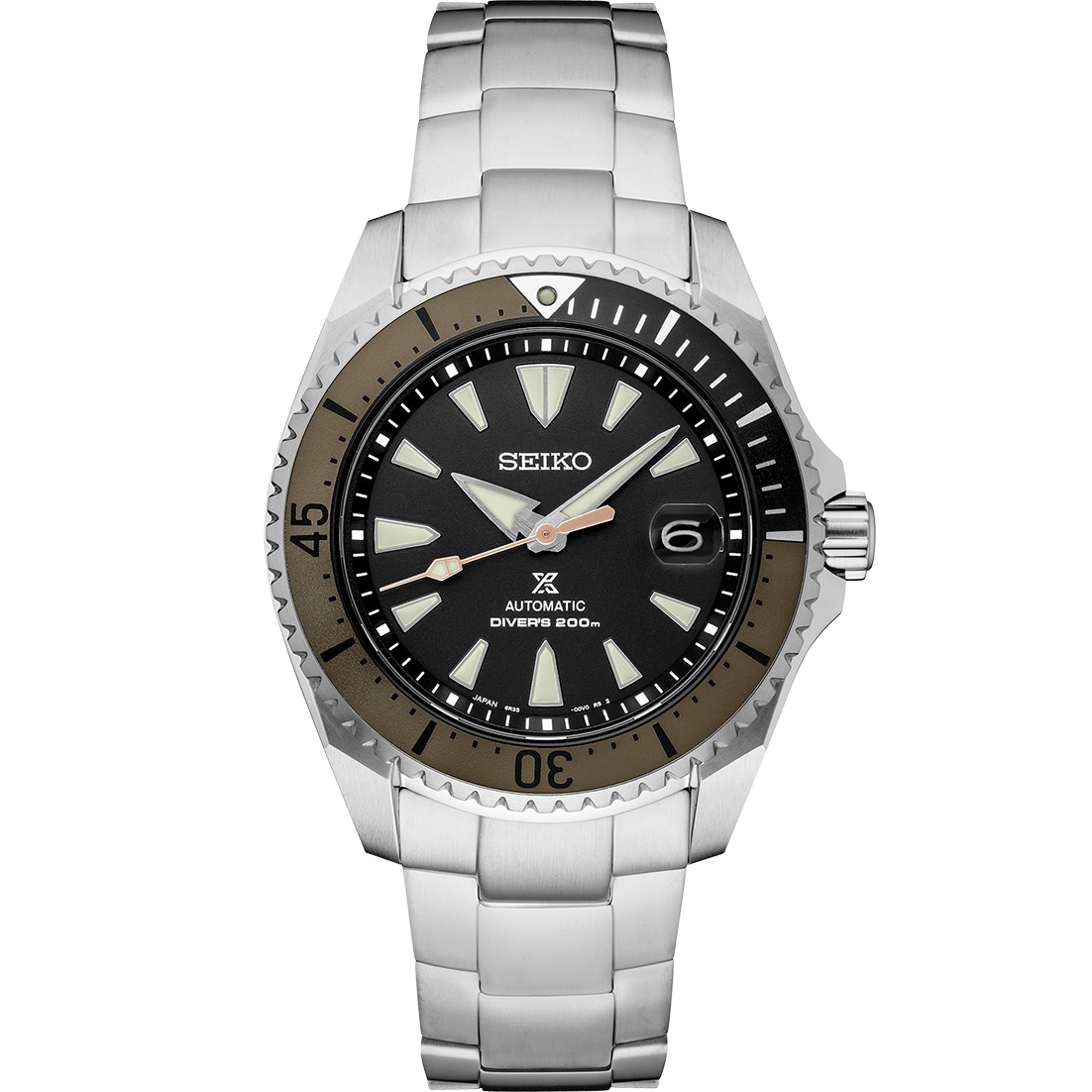

 CitizenPromaster Dive 200m (Super Titanium) CitizenPromaster Dive 200m (Super Titanium) |  SeikoProspex Shogun SPB189 SeikoProspex Shogun SPB189 |  OrisAquis Date Titanium 43.5mm OrisAquis Date Titanium 43.5mm | |
|---|---|---|---|
| Price | $575 | $1,500 | $2,800 |
| Reference | BN0200-56E | SPB189 / SBDC129 | 01 733 7730 7153 |
| Case diameter | 44.0 mm | 43.5 mm | 43.5 mm |
| Thickness | – | 13.3 mm | – |
| Lug-to-lug | – | 51 mm | – |
| Weight | 110 g (w/ bracelet) | 121 g (w/ bracelet) | 121 g (w/ bracelet) |
| Titanium | Super Titanium (proprietary) | Titanium (Super Titanium) | Titanium (grade undisclosed) |
| Movement | Citizen E168 | Seiko 6R35 | Oris 733 (Sellita SW200-1 base) |
| Power reserve | – | 70 h | 38 h |
| Water resistance | 200 m | 200 m | 300 m |
| Crystal | Mineral | Sapphire | Domed sapphire, AR coated |
| Confidence | High | High | High |
Why titanium, and why the grade is the question nobody answers
Before the head-to-head, be clear about what you are buying when you buy titanium, because it separates these three in ways the marketing rarely spells out.
Titanium is roughly 40 percent lighter than stainless steel at the same size, which matters most on a diver, a category that trends large and thick. It is also hypoallergenic and warmer against the skin in cold weather. The one that counts most for a watch designed to get wet is corrosion resistance in saltwater, where titanium is in a different class from steel.
The catch, and it is the catch that quietly decides this comparison, is that raw titanium is soft. Left untreated it picks up scratches and swirls faster than steel. This is why grade and surface treatment matter more than any other titanium spec, and it is exactly where these three watches diverge:
- Citizen uses its proprietary Super Titanium with Duratect surface hardening, engineered specifically to resist the everyday scratches titanium is prone to.
- Seiko uses Super Titanium with a super-hard coating, its own hardening approach, which protects well but is ultimately a coating over the base metal.
- Oris lists its case as titanium, grade undisclosed, brushed and uncoated. That is a transparency point rather than a knock on the watch: Oris does not publish whether it is Grade 2 or Grade 5, and the guide flags it as unstated rather than inventing a number.
That difference comes back at the verdict, and it decides more than any lume or bezel spec does.
Round one: the engine
This is the cleanest fork in the road, because these three watches are powered by three fundamentally different ideas about what a movement should be.
The Seiko Shogun runs the in-house 6R35, an automatic beating at a relaxed 3 Hz with a genuinely excellent 70-hour power reserve, which in practice means you can take it off on a Friday night and it is still running Monday morning. It is a mechanical Seiko movement with real dive-watch heritage, hand-windable and hacking. It is not a chronometer, and you should expect roughly minus 15 to plus 25 seconds a day out of the box, but it is honest and it is yours to wind.
The Oris Aquis runs the Oris 733, built on the Swiss Sellita SW200-1, one of the most widely used workhorse automatics in the industry. It beats faster, at 4 Hz, giving the seconds hand that smoother Swiss sweep, and Oris regulates and finishes it to its own standard. The trade-off is the power reserve: 38 hours, roughly half the Seiko. Leave an Aquis off over a weekend and it is dead by Sunday. What you pay for here is Swiss mechanical pedigree and an independent, family-owned house standing behind it.
The Citizen Promaster does not play this game at all. Its Eco-Drive E168 is solar-powered quartz: a cell under the dial charges a capacitor, and the watch runs off light. On a full charge it keeps going for around six months in darkness, and in normal use it never needs winding or a battery. Accuracy is seconds a month rather than seconds a day. If a mechanical movement is a small living engine you tend, the Eco-Drive is an appliance that just works, and depending on who you are that is either the knock against it or the entire reason to buy it.
So the Seiko takes this round on mechanical charm backed by a reserve you can actually use, and the Oris on Swiss finishing and the smoother sweep. The Citizen wins it outright if what you want is to never think about the movement again.
Round two: on the wrist
All three land in the same neighbourhood dimensionally, 43.5 to 44 mm across, and none is a small watch. But they wear differently, and titanium is why.
The Citizen is the one that most easily disappears on the wrist, at 110 grams, the lightest of the three per the catalog. Citizen does not publish a case thickness for this reference and the guide does not carry one, so take the slimness as a claim about how it wears rather than a figure. No mechanical movement means Citizen kept the case thin, and Super Titanium keeps the weight down. What you feel as a compromise is the aluminum bezel and, more noticeably, the mineral crystal, which is the one spec that reminds you which tier it came from. This exact reference has a small aftermarket sapphire-swap following, precisely because owners want to fix that one thing.
The Seiko Shogun is the enthusiast favourite. It is the tallest at 13.3 mm and, on its titanium bracelet, 121 grams, where a comparable Seiko diver in steel can push past 200 grams. That contrast is the appeal: it reads as a serious, substantial tool diver and then wears like something far lighter. The angular, faceted case is a design people either quietly love or do not notice. It gets a sapphire crystal, LumiBrite that genuinely glows, and a clasp with an on-the-fly slide adjuster. Watch the 51 mm lug-to-lug, because on wrists under about 6.5 inches this one starts to overhang.
The Oris Aquis is the most conventionally handsome and the one that most easily crosses out of tool-watch territory. Per the catalog it also weighs 121 grams on the bracelet, the same as the Seiko, which is a reminder that a 300 m case earns its metal back. On the rubber strap it drops noticeably and turns sporty. The ceramic bezel is the tell, scratchproof and deeper in colour, and a clear step up in material quality over the Seiko coated insert and the Citizen aluminum. This is the one you would wear with a jacket without a second thought.
On the wrist, then, the Citizen is the comfort pick and the Seiko is the one that reads as a real tool watch while weighing far less than one. The Oris is the watch you would call good-looking before you called it rugged.
Round three: living with it for a decade
This is where titanium quietly rewrites the scorecard, and where a lot of buyers realize the watch they wanted is not the watch that fits their life.
Start with scratches, the daily reality of owning titanium. The Citizen is clearly the most resistant here, because Duratect makes Super Titanium hard enough to take the desk dings and cuff scuffs that would swirl an untreated case. If you wince at the first scratch, this watch is engineered for you. The Seiko super-hard coating helps too, though a coating protects until it eventually wears at high points over years of hard use. The Oris, titanium of undisclosed grade and left uncoated, is the softest of the three and will show honest wear fastest, which some owners love and others regret. This is the practical payoff of the grade question from up top.
Then there is total cost of ownership, which reorders the price gap more than the stickers suggest. A mechanical watch wants a service every five to seven years; solar quartz effectively does not. Over a decade:
- Citizen, about $575 all in. No battery, no service, backed by warranty. Realistically you may never pay to keep it running.
- Seiko, about $1,800 to $2,300. The $1,500 sticker plus one or two services at roughly $300 to $400 each.
- Oris, about $3,400 to $4,000. The $2,800 sticker plus one or two Swiss services at $400 to $600 each.
Servicing is the cost of admission to mechanical ownership rather than a flaw in either watch. It is still real money, and over ten years it widens the true gap between the Citizen and the other two well beyond what the price row shows.
A quick word on resale. In percentage terms the Citizen depreciates hardest, but on small absolute dollars, so it barely stings. The Oris holds moderately, as independent Swiss divers tend to. The Shogun is the interesting one: with the reference now aging out of the Seiko lineup, clean examples have held their value better than a typical Seiko, which softens the mechanical-ownership math a little.
Finally, water resistance. The Oris leads at 300 m with a screw-down crown; Seiko and Citizen sit at a thoroughly capable 200 m. All three are genuine ISO-grade dive watches. For anyone short of a saturation diver, 200 m is plenty, but if headroom is a box you like ticked, Oris ticks it.
Over a decade the Citizen wins on nearly every practical axis, scratch resistance and running cost above all. The Oris takes water resistance and material presence, and the Seiko sits between the two while giving some of the difference back at resale, which is unusual.
The verdict, by who you actually are
Each of these is the right answer for a different person, so the useful question is which of the three buyers below sounds like you.
Buy the Citizen Promaster Dive 200m (Super Titanium) if you are the never-think-about-it owner
You want a titanium diver you can strap on, forget, and rediscover in ten years still running and still un-scratched. The Eco-Drive movement, the Duratect-hardened case and the lightest wear of the group, at $575, make this the most sensible titanium diver here by a wide margin. The mineral crystal is the compromise you accept, and if you are this buyer you will never think about that either.
Skip it if: you specifically want a mechanical watch, or a sapphire crystal you will never baby.
Buy the Seiko Prospex Shogun SPB189 if you are the mechanical purist on a real-world budget
You want a mechanical movement, the 70-hour reserve, a sapphire crystal, and a watch other enthusiasts recognise. Winding it and servicing it every few years is part of the appeal for you rather than a cost you tolerate. At $1,500 the Shogun sits between the appliance and the luxury object: a genuinely special in-house Japanese diver that wears far lighter than it looks, with resale that is kinder than most.
Skip it if: your wrist is under about 6.5 inches (that 51 mm lug-to-lug will overhang), or you resent servicing costs.
Buy the Oris Aquis Date Titanium 43.5mm if you are the one-watch buyer who wants finishing and prestige
You want the ceramic bezel, the 300 m rating, the domed sapphire, and an independent Swiss brand that no conglomerate owns. You will wear it with a suit and never feel underdressed. At $2,800 you accept the shortest 38-hour reserve, an undisclosed-grade uncoated case that scratches most easily, and the highest ten-year cost, in exchange for the most refined object of the three.
Skip it if: you rotate watches and hate resetting a dead one, or scratch resistance is a priority (that undisclosed, uncoated titanium is the softest here).
One thing worth saying plainly, since the scorecard cannot: the specification that most often decides this comparison after a year of ownership is the one Oris does not publish. Scratch resistance follows grade and treatment, and it is the difference a buyer notices daily long after the movement debate has stopped mattering.
Frequently asked questions
Is titanium actually good for a dive watch?
For most buyers it beats steel. It is lighter, warmer on the skin and much more corrosion resistant in saltwater, which is the environment a diver is built for. The trade-off is that untreated titanium scratches more easily, which is why hardening treatments like Citizen Duratect and the Seiko super-hard coating matter.
Does titanium scratch easily?
Untreated, more easily than steel. Two of these three are hardened, though: the Citizen Duratect is the most scratch resistant of the group and the Seiko coating is well protected until it eventually wears at the high points. The Oris, uncoated and grade undisclosed, is the one most likely to show honest wear.
Is the Citizen really worth buying over the Seiko?
For a set-it-and-forget-it owner, yes. It is cheaper and lighter, it resists scratches better, and it needs no servicing or battery. The Seiko earns the extra money only if you specifically want a mechanical movement and a sapphire crystal, which for a lot of buyers is exactly what they came for.
Which titanium diver has the best water resistance?
The Oris Aquis, at 300 m with a screw-down crown. The Seiko Shogun and Citizen Promaster are both rated 200 m, still genuine ISO-grade dive watches, and more than enough for anyone who is not saturation diving.
Verified entries: Citizen Promaster Dive 200m (Super Titanium) · Seiko Prospex Shogun SPB189 · Oris Aquis Date Titanium 43.5mm