Bulova Lunar Pilot Meteorite Super Titanium vs Seiko Astron GPS Solar Dual-Time Chronograph SSH175
Two titanium quartz chronographs from big names that are barely the same kind of object. One is a $1,695 space-heritage moonwatch with a one-of-a-kind meteorite dial and a high-frequency quartz movement. The other is a $3,100 GPS-solar travel instrument that syncs to atomic time by satellite anywhere on earth, tracks a second timezone and a perpetual calendar, and never needs setting or a battery. Same category, opposite reasons to buy.

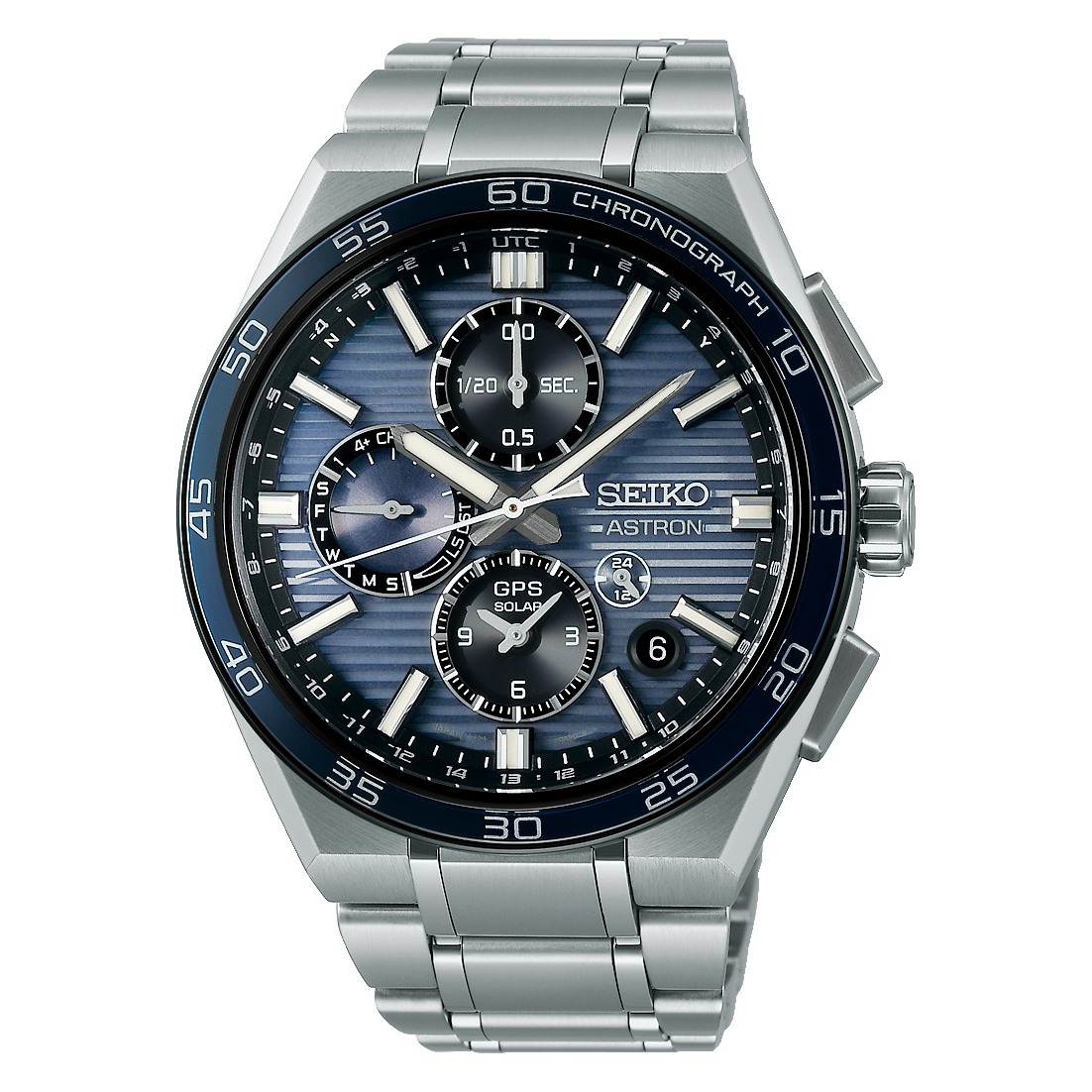
Buy the Bulova for the space heritage, the unique meteorite dial, the smooth high-frequency quartz sweep, and half the price. Buy the Seiko for a do-everything GPS-solar travel tool, atomic-accurate time worldwide, a perpetual calendar, a worldtimer, and set-and-forget solar power.
Choose the Bulova if
- You want the space heritage: the Lunar Pilot descends from the Bulova chronograph an Apollo 15 astronaut wore on the moon.
- You want a genuinely unique dial, a slice of Muonionalusta meteorite, so no two are quite alike.
- You want the high-frequency 262 kHz quartz, with its smooth sweeping chronograph hand and strong accuracy.
- You want to spend far less, roughly $1,400 less, and lighter on a classic leather strap.
Choose the Seiko if
- You want the technology: GPS Solar locates satellites to set exact atomic time and adjust the timezone automatically, anywhere on earth.
- You want a travel and everyday tool, with a second timezone, a worldtimer and a perpetual calendar built in.
- You want set-and-forget ownership: solar power and satellite sync mean no winding, no battery, and no time-setting.
- You prefer it on a matching Super Titanium bracelet, rated to 100 m.
The specs, side by side
 BulovaLunar Pilot Meteorite Super Titanium BulovaLunar Pilot Meteorite Super Titanium |  SeikoAstron GPS Solar Dual-Time Chronograph SSH175 SeikoAstron GPS Solar Dual-Time Chronograph SSH175 | |
|---|---|---|
| Price | $1,695 | $3,100 |
| Case diameter | 43.5 mm | 44.1 mm |
| Thickness | 13 mm | 14.4 mm |
| Lug-to-lug | – | – |
| Water resistance | 50 m | 100 m |
| Weight | 82 g | 110 g (w/ bracelet) |
| Titanium grade | Grade 5 | Titanium (Super Titanium) |
| Surface treatment | Sandblasted | Super-hard coating |
| Movement | High-precision quartz chronograph | GPS Solar |
| Power reserve | – | 6 months |
| Complications | Chronograph | Chronograph, GMT, Worldtimer, Perpetual calendar |
| Crystal | Double-curved sapphire, AR coated | Sapphire |
| Bracelet / strap | Leather strap | Titanium |
| Origin | United States | Japan |
| Confidence | High | High |
Our read
Two titanium chronographs, two philosophies
These line up on the spec sheet as cousins, both titanium quartz chronographs from major makers, both large watches around 43 to 44 mm, both under sapphire. Past that they are selling opposite things. The Bulova sells heritage and material romance, a moonwatch story wrapped around a meteorite dial. The Seiko sells technology, a satellite-synced solar instrument that manages time for you. Because both are quartz, there is no mechanical-soul debate to have here, which leaves a simpler and starker question. Do you want a watch with a story, or a watch with a brain.
Heritage and a meteorite dial
The Bulova leans on one of the great space footnotes. On Apollo 15, the astronaut Dave Scott wore a Bulova chronograph on the lunar surface after his issued watch failed, and the modern Lunar Pilot descends from it. This meteorite edition adds a dial cut from Muonionalusta meteorite, so every example carries a slightly different crystalline pattern. Inside is Bulova high-frequency quartz running at 262 kHz, many times a standard quartz beat, which drives a smooth, near-sweeping chronograph hand and tight accuracy. It is sandblasted Grade 5 titanium on a leather strap, with the classic moonwatch silhouette and nothing else bolted on, and at $1,695 it is the one you buy for romance and value.
A satellite in a case
The Seiko Astron is the opposite kind of watch, a tool built to erase the work of owning one. Press the button and the GPS Solar 5X83 finds satellites to pull exact atomic time and set the correct timezone wherever you are, then it runs on light with a six-month reserve, so it never wants a battery or a setting. On top of that it carries a second timezone, a worldtimer and a perpetual calendar, all in Super Titanium with a super-hard coating and a titanium bracelet, rated 100 m. The costs are size and busyness, since at 14.4 mm thick and 110 g it wears large and heavy, and the dial is far more crowded than the Bulova. At $3,100 it is the one you buy for the technology.
How they wear and what they cost
Both are big, but not in the same way. The Bulova is 43.5 mm, 13 mm thick and about 82 g on a strap, so it wears large but lighter and cleaner. The Seiko is 44.1 mm, 14.4 mm thick and 110 g on its bracelet, so it wears bigger, heavier and more technical. The price gap is the other half of the decision. At $1,695 against $3,100, the Seiko asks roughly $1,400 more, and what that money buys is function, the GPS-solar travel brain, rather than finishing or heritage. The Bulova counters with the lower price, the unique dial, and the lighter strap-worn wear.
So which one
This is another pairing where the two barely compete for the same buyer, which makes the choice cleaner than the shared category suggests. Pick the Bulova if you are buying a watch to look at and tell a story about, a real space lineage, a one-of-a-kind meteorite dial, a smooth high-frequency quartz, and a keen price. Pick the Seiko if you are buying an instrument that quietly handles time for you across the globe, atomic-accurate anywhere, with a perpetual calendar, a worldtimer, and solar power that means you never touch it. One is a keepsake. The other is a machine that does your thinking about time zones so you do not have to.
Full details: Bulova Lunar Pilot Meteorite Super Titanium · Seiko Astron GPS Solar Dual-Time Chronograph SSH175
All Bulova titanium watches · All Seiko titanium watches · How we verify & grade