Seiko Prospex LX Line SNR025 vs Tudor Pelagos FXD GMT
Two titanium travel watches within $480 of each other, both true GMTs that jump the local hour for travel, both 200 m, both under sapphire. They could hardly wear more differently, or run on more different engines. One is a large Spring Drive luxury-tool on a titanium bracelet. The other is a featherweight mechanical dive-GMT on a fabric strap that weighs about half as much. Same price, opposite watches.
Buy the Seiko for the Spring Drive glide and quartz-like accuracy, a full GMT-date-power-reserve dial, and real presence on a titanium bracelet. Buy the Tudor for a featherweight, METAS-certified mechanical travel tool that is nearly half the weight and far more compact.
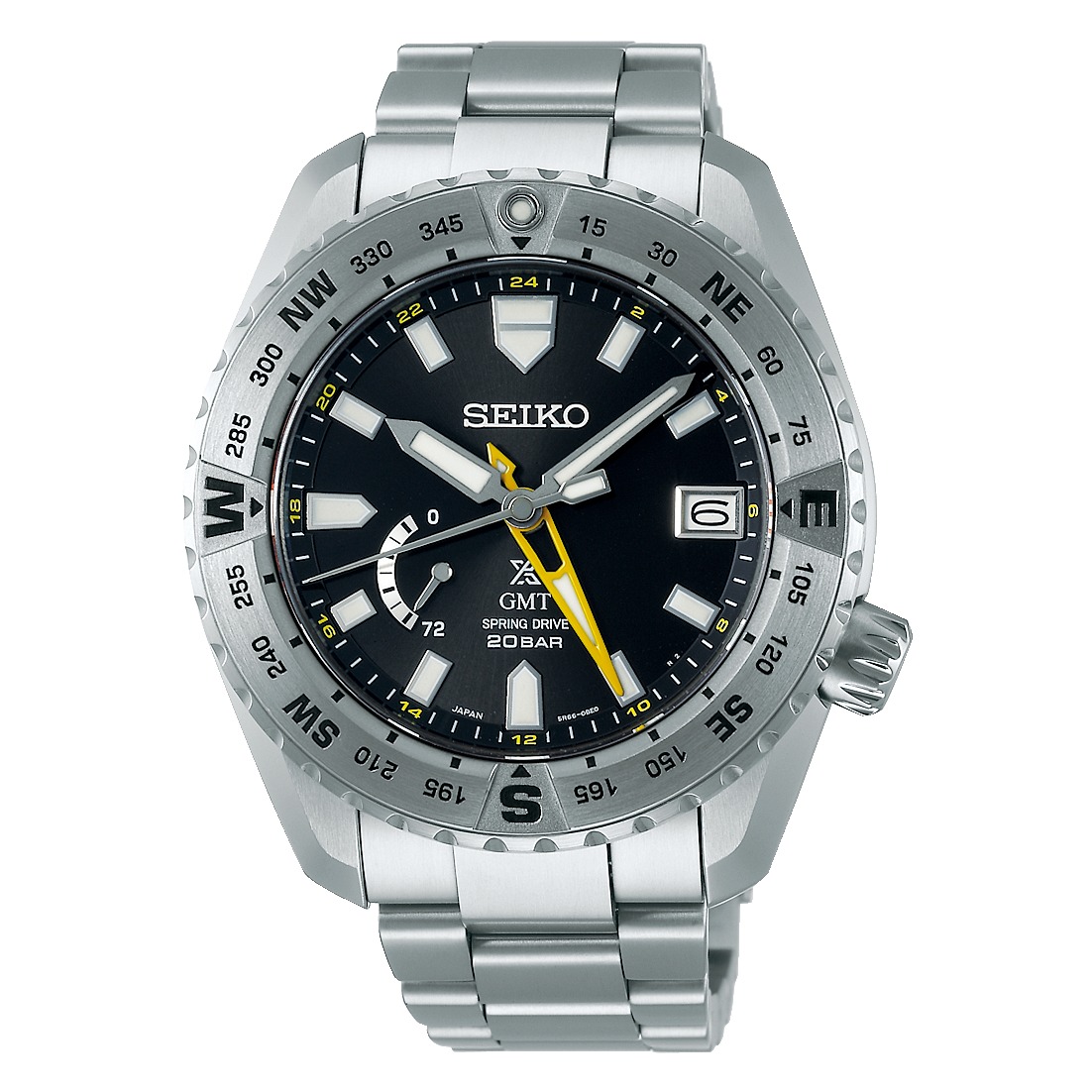
Choose the Seiko if
- You want the Spring Drive experience: a perfectly smooth glide-motion seconds hand and roughly one second a day of accuracy.
- You want a full-information dial, with the GMT, the date and a power-reserve indicator.
- You want presence and a titanium bracelet, a substantial 44.8 mm luxury-tool.
- You want Seiko in-house technology you cannot get anywhere else.
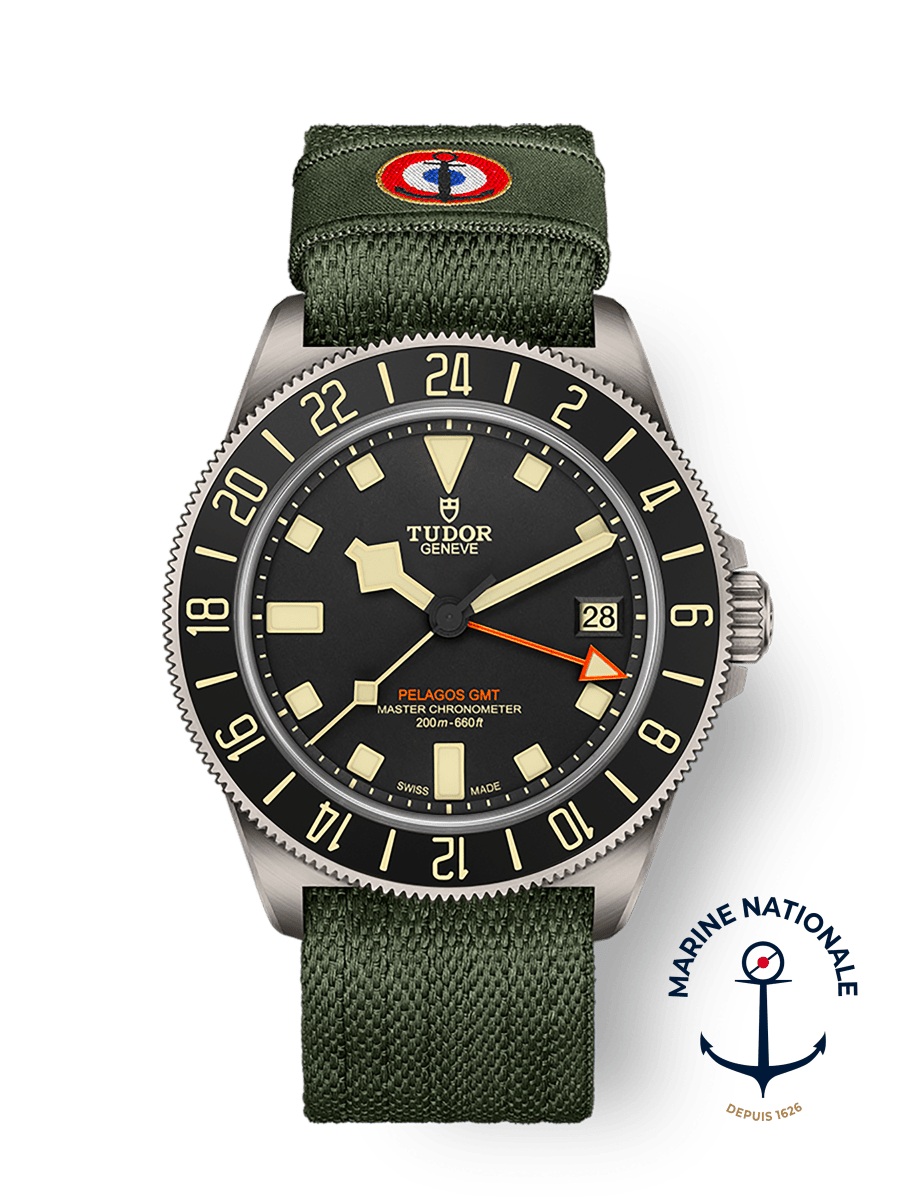
Choose the Tudor if
- You want the lightest, most compact travel tool, 42 mm and about 81 g on the strap against 158 g for the Seiko.
- You want certified mechanical precision: the MT5652 is COSC and METAS Master Chronometer rated, with high magnetic resistance.
- You prefer a clean, GMT-only tool dial and a purpose-built military design.
- You like the fabric-strap, fixed-bar FXD format and its monobloc case.
The specs, side by side
 SeikoProspex LX Line SNR025 SeikoProspex LX Line SNR025 |  TudorPelagos FXD GMT TudorPelagos FXD GMT | |
|---|---|---|
| Price | $5,000 | $5,475 |
| Case diameter | 44.8 mm | 42.0 mm |
| Thickness | 14.7 mm | 12.75 mm |
| Lug-to-lug | – | – |
| Water resistance | 200 m | 200 m |
| Weight | 158 g (w/ bracelet) | 81 g (w/ bracelet) |
| Titanium grade | Titanium (Super Titanium) | Grade 2 case / Grade 5 caseback |
| Surface treatment | Super-hard coating | Satin / sandblasted (untreated) |
| Movement | Spring Drive (GMT) | Automatic (GMT) |
| Power reserve | 72 h | 65 h |
| Complications | GMT, Date, Power reserve | GMT, Date |
| Crystal | Sapphire | Sapphire |
| Bracelet / strap | Titanium | Green one-piece fabric strap with titanium pin buckle and keeper; extra removable fabric keeper with the French Naval Aviation roundel |
| Origin | Japan | Switzerland |
| Confidence | High | High |
Our read
Both are true GMTs, so start with the rest
One thing you do not need to agonize over: both of these are proper traveler GMTs, where the local hour hand jumps in one-hour steps while the 24-hour hand tracks home, which is the function most travellers actually want. So the usual GMT tie-breaker is off the table. What is left is a much bigger split, how they are powered and how they wear, and on both counts these two are near opposites despite the matching price.
Spring Drive versus certified mechanical
The engines are the headline. The Seiko runs a 5R66 Spring Drive, the brand own hybrid, a mechanical mainspring regulated electronically, which gives a dead-smooth glide-motion seconds hand, roughly one second a day of accuracy that is tighter than any mechanical chronometer, a 72-hour reserve, and a power-reserve indicator on the dial. The Tudor runs the MT5652, a conventional automatic, but one held to both COSC and METAS Master Chronometer standards, so it is kept to tight accuracy and high magnetic resistance, with a 65-hour reserve. One is a technical marvel you can only get from Seiko. The other is a certified mechanical movement built to be knocked about and stay accurate. Neither is better, they are simply different pleasures.
The wear could not be more different
This is where the decision often gets made. The Tudor is 42 mm, 12.75 mm thick, and about 81 g on its fabric strap, a genuine featherweight that all but vanishes, which is what most people are after in a titanium travel watch. The Seiko is 44.8 mm, 14.7 mm thick, and 158 g on its titanium bracelet, nearly double the weight and a much larger watch on the wrist. If you want the lightest, most compact tool that you forget you are wearing on a long flight, the Tudor is in another class. If you want presence and the reassuring heft of a substantial luxury-tool, the Seiko has it.
Dial, strap, and what each is for
The Tudor keeps it spare, a GMT-only Zulu-time dial, the Pelagos snowflake hands, a monobloc case and fixed strap bars, all on a fabric strap. It reads as exactly what it is, a navigation tool. The Seiko loads its dial with the GMT, the date and a power-reserve indicator, wears the more sculpted, design-led LX execution, and comes on a titanium bracelet. One is the pared-down mission watch. The other is the fully-equipped, more overtly luxurious traveller.
So which one
At the same money, this is a rare case where the two barely overlap, so the choice makes itself once you know what you want to fly with. Go for the Tudor if you want the lightest, most compact, certified-mechanical travel tool, and you are happy on a fabric strap. Go for the Seiko if you want the Spring Drive glide and accuracy, a fuller dial and a titanium bracelet, and a watch you feel on the wrist rather than forget. The Tudor is the featherweight. The Seiko is the showpiece.
Full details: Seiko Prospex LX Line SNR025 · Tudor Pelagos FXD GMT
All Seiko titanium watches · All Tudor titanium watches · How we verify & grade