Bremont Altitude (Titanium) vs Oris ProPilot X Calibre 400 (Titanium)
Two titanium pilot watches at around $5,000, both automatic, both 100 m, both with a display caseback, both aimed at the buyer who wants one serious titanium flieger and is done shopping. They pull in opposite directions. The Bremont leans on British aviation heritage and on how many ways you can strap it to your wrist. The Oris counters with one of the best movements in the class and a lower price. The odd part is that the cheaper watch is the one with the more impressive engine.
Buy the Bremont for the British aviation-brand story, a lighter and larger 42 mm case, and the flexibility of a titanium bracelet plus leather, rubber and NATO straps. Buy the Oris for the class-leading Calibre 400, a compact modern 39 mm, and the lower price.
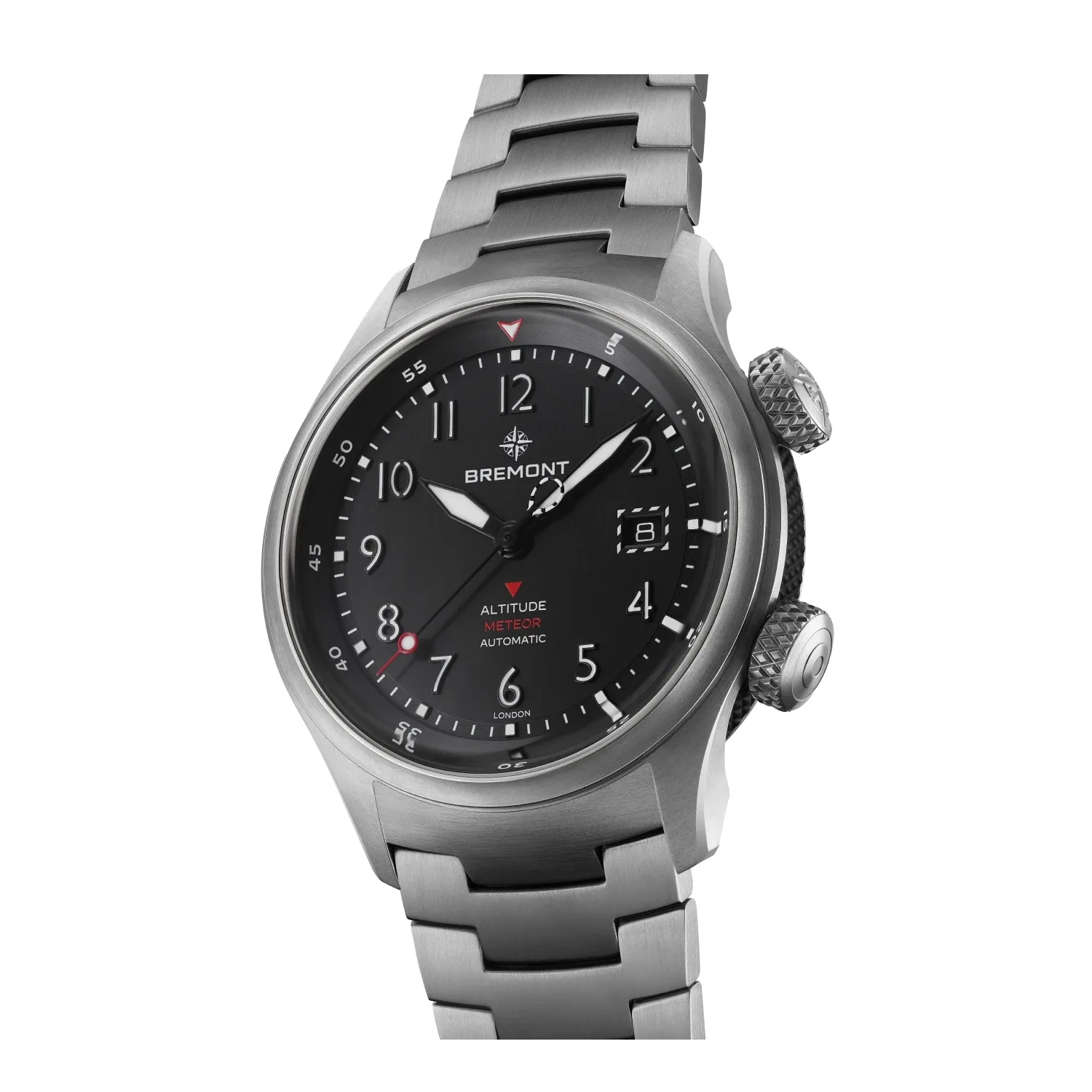
Choose the Bremont if
- You want the British aviation-brand identity and a more classic pilot look.
- You want strap flexibility: it comes on a titanium bracelet, or leather, rubber and NATO.
- You prefer a larger 42 mm case, with a genuinely light 53 g head.
- You like the domed glassbox sapphire and the traditional flieger silhouette.
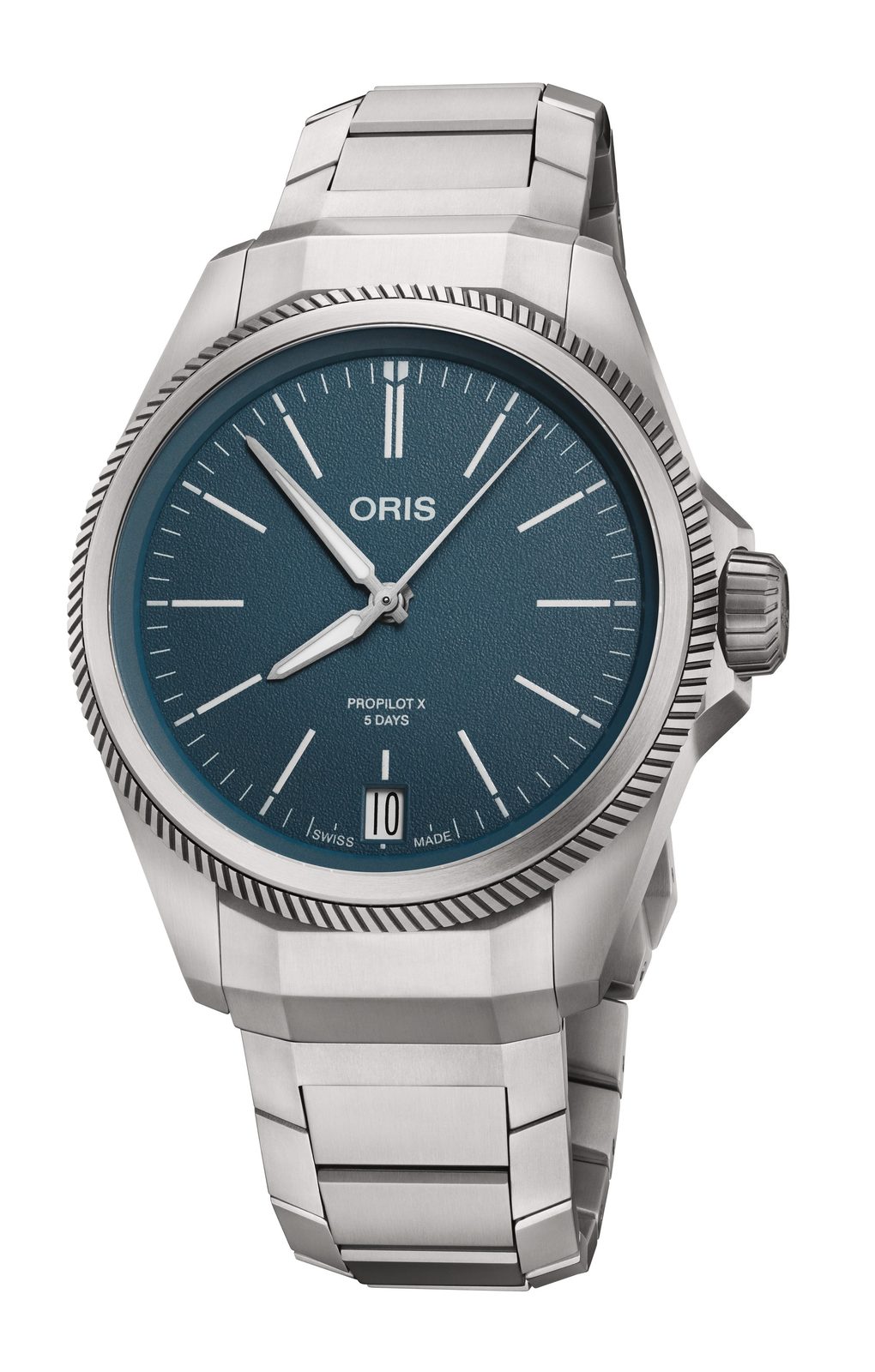
Choose the Oris if
- You want the standout movement: the in-house Calibre 400, with a five-day reserve and strong anti-magnetism.
- You want to spend less, about $500 less.
- You prefer a compact, modern 39 mm with an industrial integrated-bracelet design.
- You value the long service interval the Calibre 400 was built around.
The specs, side by side
 BremontAltitude (Titanium) BremontAltitude (Titanium) |  OrisProPilot X Calibre 400 (Titanium) OrisProPilot X Calibre 400 (Titanium) | |
|---|---|---|
| Price | $5,300 | $4,800 |
| Case diameter | 42.0 mm | 39.0 mm |
| Thickness | 12.23 mm | – |
| Lug-to-lug | 49.3 mm | – |
| Water resistance | 100 m | 100 m |
| Weight | 53.29 g (head) | 93 g (w/ bracelet) |
| Titanium grade | Grade 2 | Titanium (grade undisclosed) |
| Surface treatment | Brushed / polished (Trip-Tick) | None |
| Movement | Automatic | Automatic |
| Power reserve | 68 h | 120 h |
| Complications | Date | Date |
| Crystal | Sapphire glassbox (+ caseback) | Domed sapphire, AR coated |
| Bracelet / strap | Titanium or leather / rubber / NATO | Titanium bracelet |
| Origin | United Kingdom | Switzerland |
| Confidence | High | High |
Our read
Two ways to spend $5,000 on a titanium pilot
On paper these line up closely. Both are titanium automatics rated 100 m, both carry a date, both have a display caseback, and both sit within a few hundred dollars of each other, and both are pilot watches by identity rather than tool-diver crossovers. The difference is philosophy. The Bremont Altitude is the flagship of a British aviation brand and plays that card hard, with classic flieger styling and a wide choice of straps. The Oris ProPilot X is a modern, industrial, integrated-bracelet design that pours its money into the movement. You are choosing between a brand story and a technical one.
The movement is where it splits
This is the clearest gap between them, and it runs the opposite way to the price. The Oris uses the in-house Calibre 400, one of the most talked-about movements in the segment, with a five-day power reserve, high resistance to magnetism, and a service interval Oris sets far longer than the industry norm. The Bremont runs the BB14, a modified La Joux-Perret G100, a perfectly good Swiss automatic with a 68-hour reserve, but an outsourced base rather than an in-house showpiece. If the engine is what you care about most, the cheaper Oris is the one to beat.
Size, weight, and how they wear
The Bremont is the larger watch at 42 mm, yet its bare head is genuinely light at about 53 g, and it wears its size with a slim 12.23 mm profile and a 49.3 mm lug-to-lug. The Oris is the more compact 39 mm and reads as the more tightly integrated, modern design. Read the weights in context, since the Oris 93 g is measured on its titanium bracelet while the Bremont 53 g is the head alone, so that is not a like-for-like gap. Both are titanium-light in the hand. A smaller, contemporary footprint points to the Oris, a larger classic pilot that still wears light to the Bremont.
Straps, looks, and brand
Here the Bremont answers back. Where the Oris is an integrated-bracelet design, so its bracelet is part of the look and not something you casually swap, the Bremont comes on a titanium bracelet or on leather, rubber and NATO, which makes it the more versatile wardrobe piece and the easier one to dress up or down. In style the Oris is overtly modern and industrial, with exposed screws and a skeletonized bezel, while the Bremont is the more traditional flieger, with a domed glassbox sapphire and the aviation cues the brand is built on. Which is better looking is entirely your call, and they are chasing different tastes.
So which one
Be honest with yourself about what you are actually paying for. If it is the movement and the value, the Oris wins that argument cleanly, a five-day in-house calibre in a compact modern 39 mm that wears its engineering on its sleeve, for less money. If it is the brand and the range, the Bremont is the British aviation name, the larger and lighter classic pilot, and the pile of straps the Oris cannot match. The Oris takes the spec sheet, especially the movement, and the Bremont takes the story and the wardrobe. Work out which of those you were really buying.
Full details: Bremont Altitude (Titanium) · Oris ProPilot X Calibre 400 (Titanium)
All Bremont titanium watches · All Oris titanium watches · How we verify & grade