Radium Instruments .42 OP5
The Radium Instruments .42 OP5 is a 42 mm Grade 5 titanium watch with a Sellita SW200-1 automatic movement.
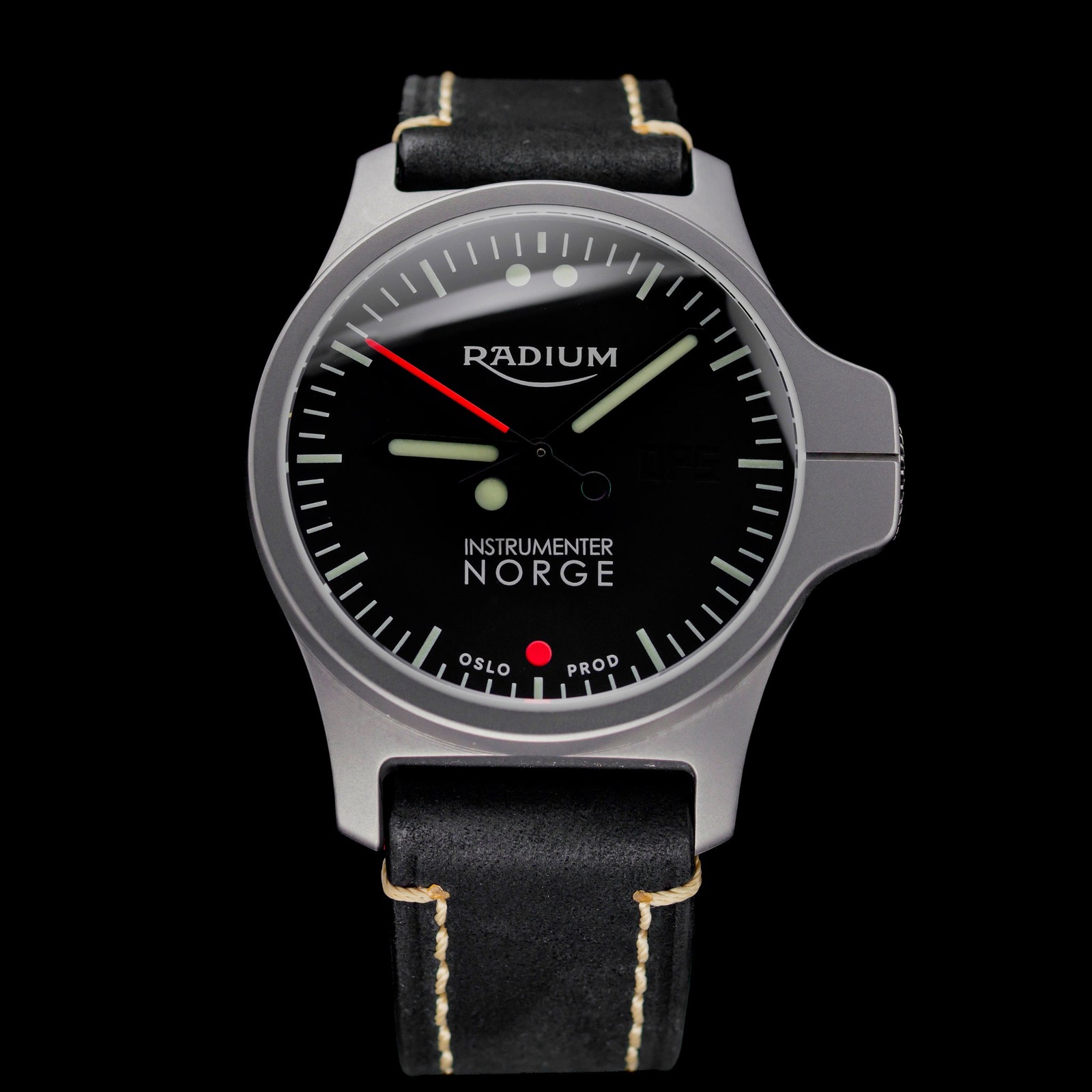
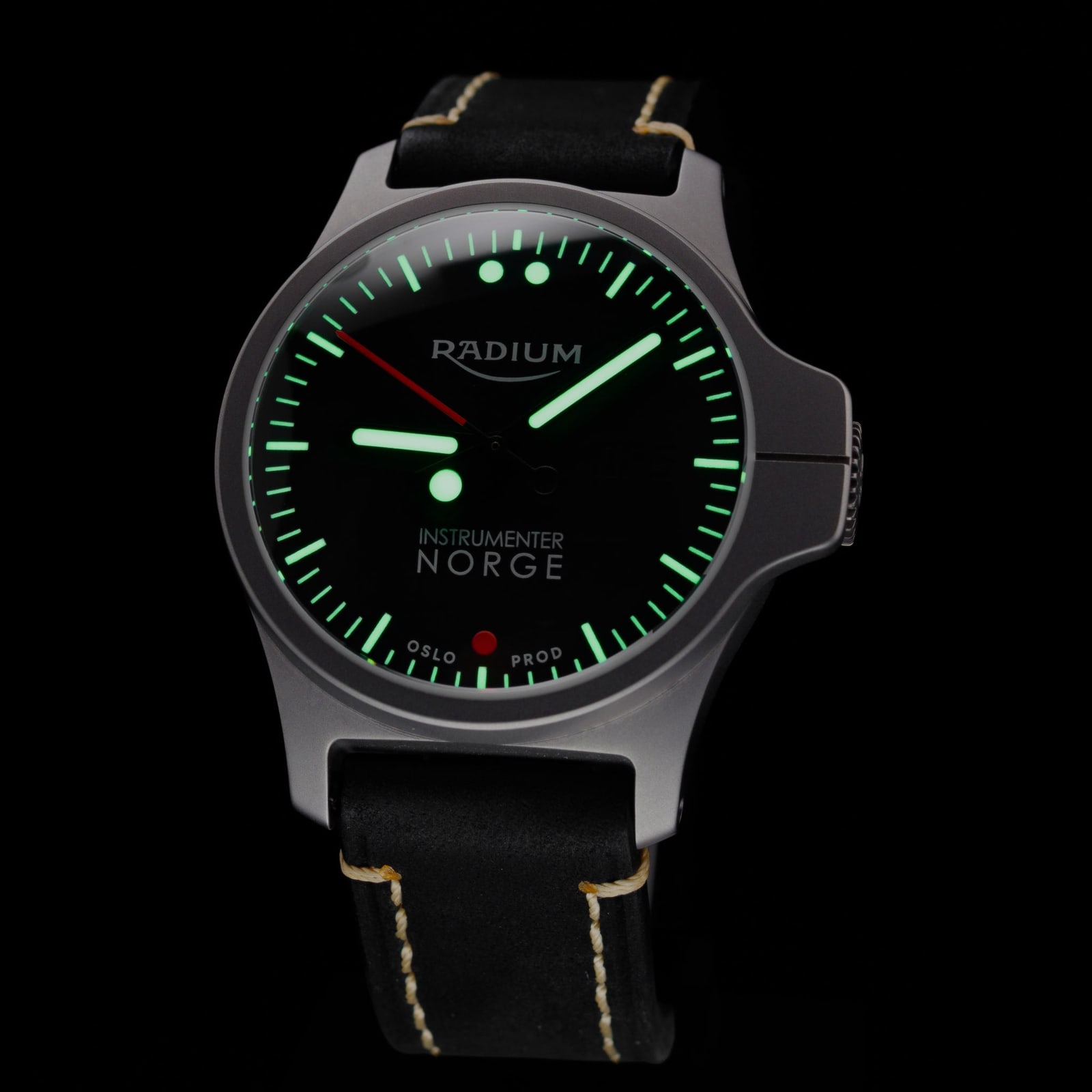
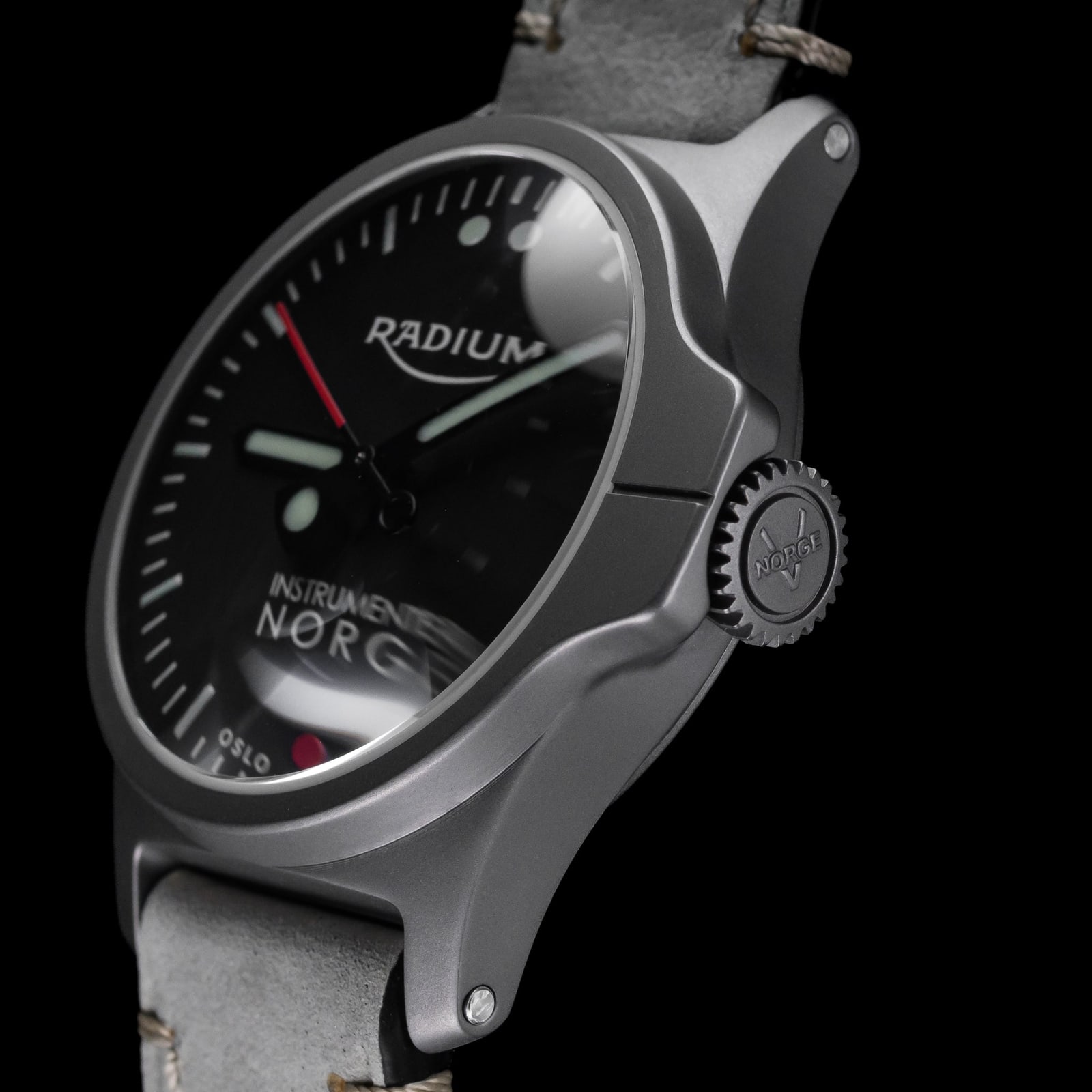
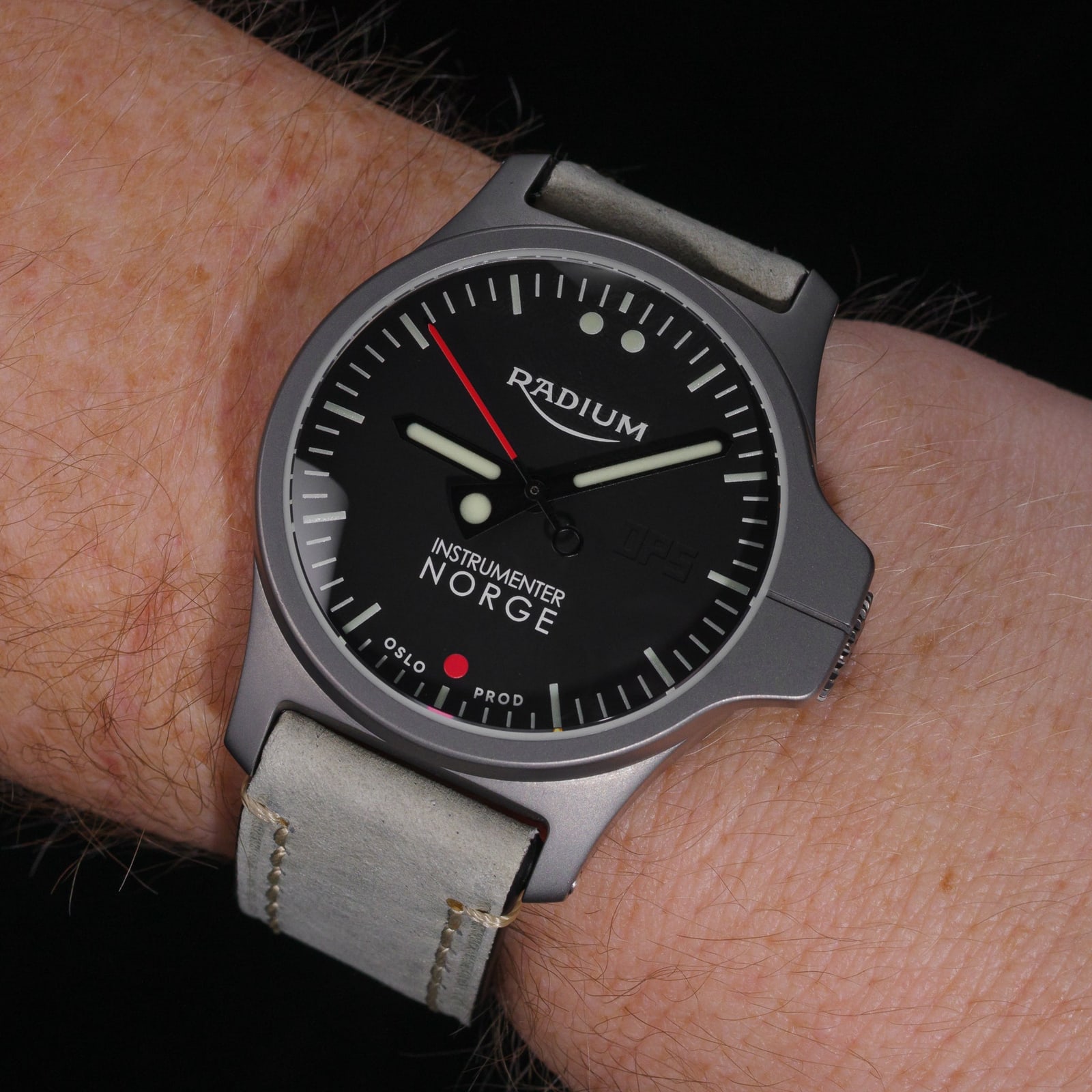
4 official photos · reader photos welcome
Material
Titanium
Grade / type
Grade 5
Water resistance
200 m
- Type
- Other
- Price
- – · NOK 38,660 on the maker store (radiuminstruments.no, base currency NOK). The store's US presentment is a converted figure and NOK is not among the guide's supported currencies, so no dollar price is recorded
- Case diameter
- 42.0 mm
- Thickness
- 13.3 mm
- Origin
- Norway
- Movement
- Automatic
- Caliber
- Sellita SW200-1
- Complications
- Time only
- Colour
- Grey
- Surface treatment
- None
- Finish technology
- Natural finish
- Nickel-free
- Unconfirmed (contact-point materials not all confirmed)
- Bracelet / strap
- Leather strap
- Crystal
- Sapphire
- Display back
- No
- Dial
- Black
- Dial colours
- Black
- Availability
- Offered
- Status
- Current
- Not published
- Reference, Lug-to-lug, Weight, Power reserve, Hardness, Construction, Caseback, Matching bracelet, Lume
Facts are free to cite with a link.
Reader reviews & photosContribute photo or review
Browse all watch comparisons →
Similar watches
 BoderryStorm Titaniumsame category · same style · similar size · similar thickness
 AerotecAtlanticsame category · same style · similar size · similar thickness
 Gruppo ArditoDandysame category · same style · similar size · similar thickness
 ZbiolandRadial Engine SLsame category · same style · similar size · similar thickness
 GorillaWandering Hours Outlaw 42mm Swiss Made Limited Editionsame category · same style · similar size · similar thickness
 Greco GeneveLes Temps Modernes LTM-01Tsame category · same style · similar size · similar thickness
 Greco GeneveLes Temps Modernes LTM-85Tsame category · same style · similar size · similar thickness
 Greco GeneveLes Temps Modernes LTM-66Tsame category · same style · similar size · similar thickness
Alternatives to the Radium Instruments .42 OP5
 CadisenTitanium TI-7 Autodynesame category · same style · similar size · same movement
 BernyAutomatic Titanium Full-Lume Watch AMT258same category · same style · similar size · same movement
 ThornT018 PT5000 Retro Titaniumsame category · same style · similar size · same movement
 BoderrySeaTurtle.Ocean Titaniumsame category · same style · similar size · same movementEclat GroveForest Guardiansame category · same style · similar size · same movement
 KRONOSTISTRUC Time Shuttlesame category · same style · similar size · same movement
More watches from Radium Instruments


Frequently asked questions
What grade of titanium is the Radium Instruments .42 OP5?
Grade 5, as stated by the maker.
What size is the Radium Instruments .42 OP5?
The case is 42 mm across and 13.3 mm thick. It is water resistant to 200 m.
How much does the Radium Instruments .42 OP5 cost, and is it available?
It is in production, but the maker does not publish a price.
All Radium Instruments watches · Other watches · All 1,960 watches
Learn: Titanium grades · Surface treatments · Why titanium scratches · How to read a spec
How we verify & grade · Image & Trademark Policy · Terms & Conditions · Privacy Policy