Why Titanium Watches Scratch
Last updated
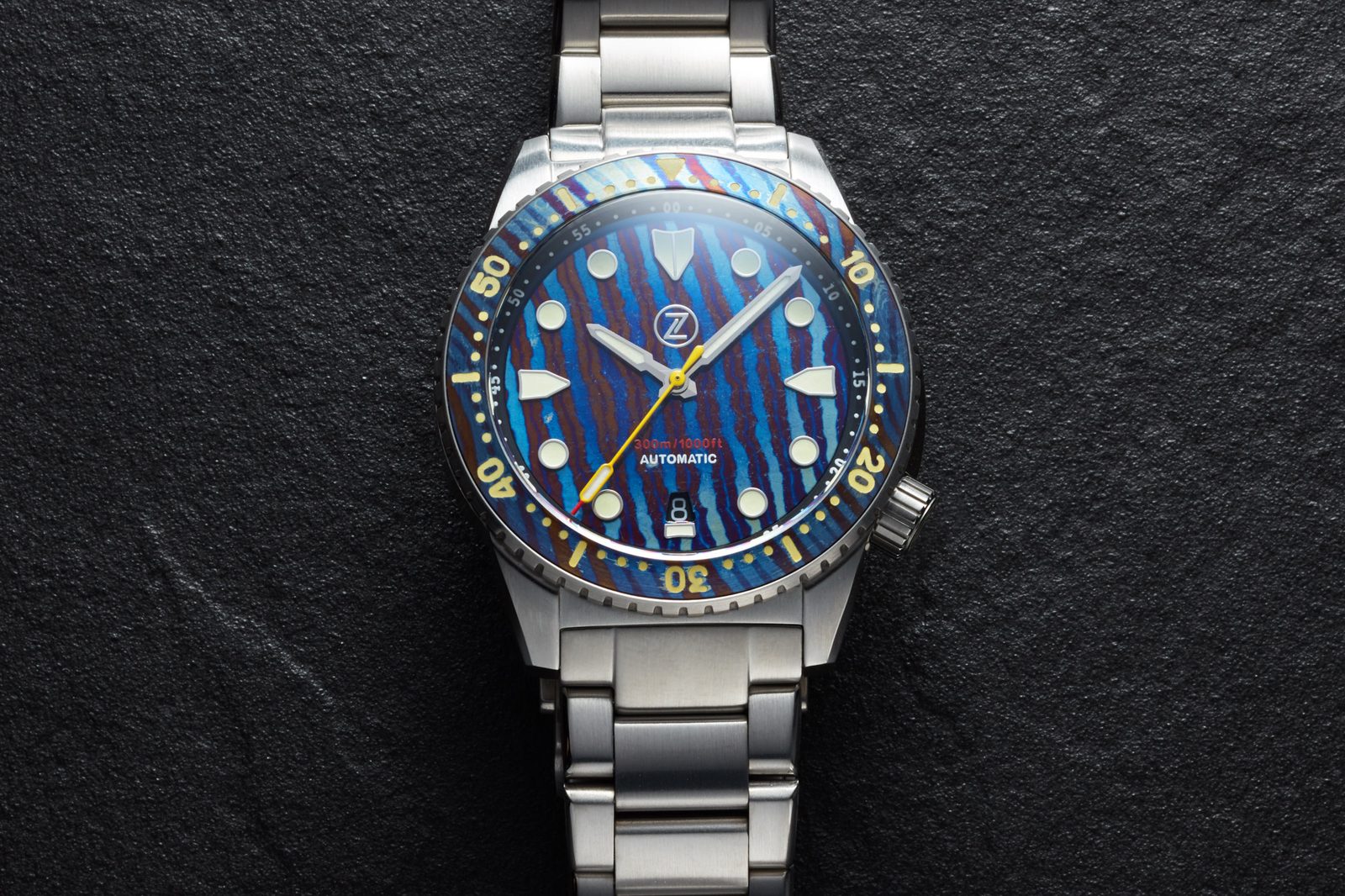
Titanium is light and comfortable, but it does not behave like steel. Here is why it marks, and what coatings and finishes actually do about it.
Titanium is not automatically scratch-proof
Titanium is strong for its weight, but scratch resistance is about surface hardness, not strength. Some untreated titanium can actually show marks more visibly than steel. That surprises people who expect a tougher metal to stay pristine.
How hard titanium actually is
Scratch resistance tracks surface hardness, which is measured in Vickers (HV). These are the published ranges for the base materials, which vary by alloy and process, and they explain why bare titanium marks and why Grade 5 does a little better. The hardened row deliberately carries no number: the makers of branded treatments do not publish a Vickers figure for them, and this guide does not invent one.
| Material or finish | Approx. hardness (HV) | Scratch resistance |
|---|---|---|
| Grade 2 titanium (commercially pure) | 145 to 215 | Low, marks easily |
| 316L stainless steel | 150 to 220 | Low to moderate |
| Grade 5 titanium (Ti-6Al-4V) | 300 to 380 | Moderate |
| Hardened or hard-coated titanium (Tegiment, Duratect, DLC) | Makers rarely publish a figure | High |
| High-tech ceramic | 1100 to 1500 | Very high |
| Sapphire crystal (for reference) | about 2200 | Extreme |
Read down the column and the pattern falls out on its own. Bare titanium sits near soft steel, Grade 5 pulls ahead of both, and a hardening treatment carries titanium past hardened steel into ceramic territory. That is the reason a case treatment often does more for real-world scratch resistance than the grade underneath it.
How many titanium watches do anything about it
Most do not. 1,090 of the 1,600 titanium references here (68 percent) are bare metal with no hardening and no coating, so the behaviour described above is the normal case rather than the exception. The remaining 510 (32 percent) carry a surface treatment of some kind.
Where that treatment exists, it clusters: Surface hardening on 269 references from 27 brands, DLC on 161 references from 58 brands, PVD / IP on 49 references from 31 brands, Anodized / heat-treated on 9 references from 6 brands.
Hardening is also not the luxury option it sounds like. The median treated reference here is $1,174 against $1,695 for untreated titanium, so the more scratch-resistant titanium is the cheaper half of the market, because hardening is a Japanese volume-production technique rather than a haute-horlogerie one.
The practical consequence is that "get a hardened case" is advice about a minority of what is on sale, and the filter below is the fastest way to see that minority.
Scratches, scuffs, and oxide marks
Not every mark is the same. Some are true scratches in the metal. Some are surface transfer or scuffing where something harder rubbed across the case. Brushed and blasted finishes age differently, and a scuff on a matte finish can look worse than it is.
Why Grade 5 can help
Grade 5 is harder than Grade 2, so it generally resists marks a bit better. But treatment and finishing still matter, sometimes more than the grade itself.
Why hard coatings and hardening help
Treatments such as Duratect, super-hard coatings, Tegiment and DLC meaningfully improve surface durability. They carry trade-offs, chiefly that a coating wears at edges and high points over years and cannot be refinished the way bare metal can, but for scratch-conscious buyers they make a real difference.
Best choices for scratch-conscious buyers
- Choose hardened or hard-coated titanium if scratch resistance matters most.
- Prefer brushed or blasted over mirror-polished for daily wear.
- Choose darker DLC or PVD coatings only if you are comfortable with possible edge wear over time.
- Set expectations: a titanium watch worn daily will pick up some marks, and that is normal.


Frequently asked questions
Do most titanium watches have a scratch-resistant coating?
No. 1,090 of 1,600 titanium references in this guide (68 percent) are bare metal with no hardening and no coating, so an untreated case is the normal case rather than the exception. The advice to buy a hardened case describes a minority of what is actually on sale.
Is hardened titanium more expensive?
Usually less, which surprises people. Surface hardening is a Japanese volume-production technique used heavily by Citizen and Seiko rather than a haute-horlogerie feature, so treated references in this guide carry a lower median price than untreated ones.
Does titanium scratch easily?
Commercially pure (Grade 2) titanium is relatively soft and scratches more easily than hardened steel. Surface-hardened titaniums such as Super Titanium or Tegiment-treated cases resist scratches far better.
Can scratches be polished out of a titanium watch?
Light scratches in a brushed titanium finish can usually be refinished or blended. Hardened coatings such as DLC are an exception and need professional recoating rather than polishing.