Titanium Watch Grades Explained
Last updated
Grade 2, Grade 5, Super Titanium, High-Intensity Titanium, and proprietary hardened alloys are not interchangeable. Here is what the labels usually mean.
What "titanium" means in watches
On a spec sheet, "titanium" can mean several different things: commercially pure titanium, a titanium alloy such as Grade 5, a brand's proprietary alloy, surface-hardened titanium, or a branded titanium system that bundles an alloy with a treatment. The word alone does not tell you how hard, heavy, or scratch resistant a case will be. The grade and any treatment do.
What is Grade 2 titanium?
Grade 2 is commercially pure titanium. It is lightweight, highly corrosion resistant, and very skin friendly, which is why it shows up so often in tool watches and dive watches. It is softer than Grade 5, so an untreated Grade 2 case can pick up marks more readily.
In this guide it accounts for 201 references (13 percent of the catalog) from 76 brands, at a median of $753.50. That price is the useful part: Grade 2 is the working microbrand grade, cheaper to machine and easier to refinish, so it is where the accessible end of titanium lives rather than a lesser version of the alloy.


What is Grade 5 titanium?
Grade 5 is a titanium alloy, usually titanium with aluminum and vanadium (often written Ti-6Al-4V). It is harder and stronger than Grade 2, can take a sharper polish, and turns up frequently in higher-end watches. For watch-case purposes it is still generally considered nickel-free, though anyone with a severe allergy should confirm with the maker.
It is the larger of the two here, 426 references (27 percent) from 163 brands, at a median of $6,305. The gap to Grade 2 is a population effect rather than the price of the alloy: far more brands use Grade 5, across sport and luxury cases, so the median follows who uses it rather than what it costs to buy.


Why the spec sheet often will not tell you
Before comparing grades, know how often you get to. 726 of the 1,600 references here (45 percent) publish no usable grade at all: the maker prints the word titanium and stops. So for most watches on sale the grade is not a choice you can make, it is a fact you cannot obtain, and a brand that does print Grade 2 is being more transparent than one that prints nothing.
Proprietary titanium alloys
Several brands market their own titanium. The names usually describe an alloy, a treatment, or a bundle of both, and the exact recipe is often not fully disclosed.
- Grand Seiko High-Intensity Titanium: a brand alloy promoted as harder and more scratch resistant than ordinary titanium.
- Citizen Super Titanium: titanium combined with Citizen's Duratect surface hardening.
- Seiko titanium with super-hard coating: titanium finished with a hard surface coating.
- Sinn hardened titanium: Sinn applies its Tegiment surface-hardening process to titanium parts.
- Formex hardened titanium: Formex uses a case-hardening treatment on its titanium cases.
Where a brand does not publish hardness figures or the full alloy, we describe the term as a brand term and avoid quoting numbers we cannot source. Verify specifics with the maker.
 Grand SeikoHeritage "Snowflake"
 CitizenThe Citizen A060 Super Titanium (Washi Dial)
 SeikoProspex Shogun Titanium (SPB191)
 Grand SeikoEvolution 9 Spring Drive Diver 200m "Ushio" (SLGA023)
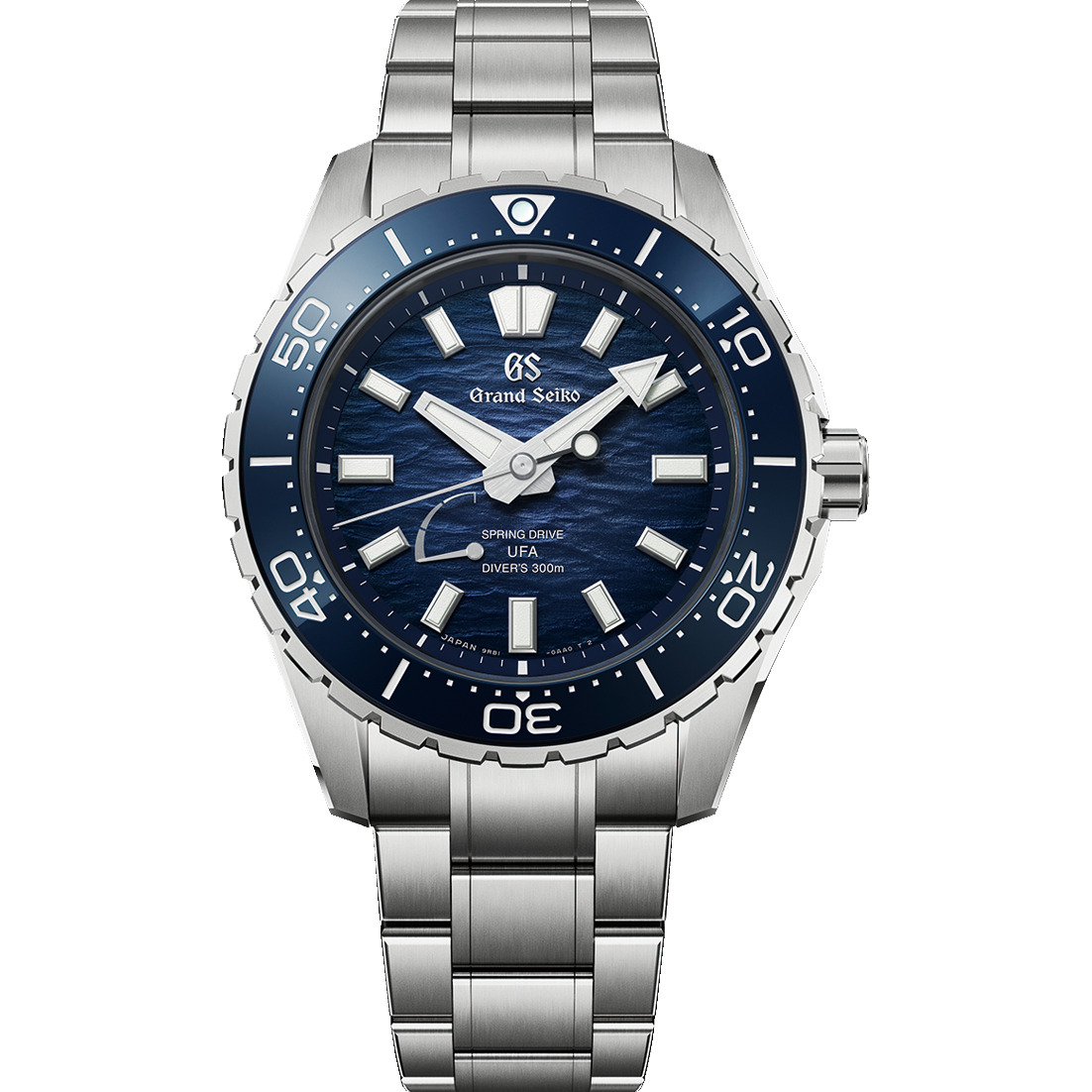
 Grand SeikoSpring Drive U.F.A. Ushio 300 Diver (SLGB023, blue)
 Grand SeikoSpring Drive U.F.A. Ushio 300 Diver (SLGB025, green)
How the grades compare
| Material / grade | Typical use | Scratch resistance | Weight | Skin comfort | Common brands |
|---|---|---|---|---|---|
| Grade 2 | Tool and dive watches | Lower unless treated | Light | Very good | Sinn, Citizen, microbrands |
| Grade 5 | Higher-end and sport watches | Higher than Grade 2 | Light | Very good | Omega, Tudor, Christopher Ward |
| High-Intensity Titanium | Grand Seiko lineups | Higher (brand alloy) | Light | Very good | Grand Seiko |
| Super Titanium | Citizen lineups | Higher (alloy plus Duratect) | Very light | Very good | Citizen |
| Titanium with hard coating | Divers and tool watches | High at the surface | Light | Very good | Seiko, Sinn, RZE, Zelos |
| Titanium Damascus / specialty | Limited and artisanal pieces | Varies | Light | Very good | ArtyA and specialists |
Browse by grade and treatment
Frequently asked questions
What is Grade 2 titanium?
Grade 2 is commercially pure titanium: unalloyed, roughly 4.51 g/cm3, highly corrosion resistant in seawater and easy to refinish. It is softer than Grade 5, so an untreated case marks more readily. In this guide it covers 201 references from 76 brands at a median of $753.50, which makes it the working grade of the accessible end of the market rather than a lesser alloy.
What is Grade 5 titanium?
Grade 5 is Ti-6Al-4V, titanium alloyed with roughly 6 percent aluminium and 4 percent vanadium, at about 4.43 g/cm3. It is harder and stronger than Grade 2 and takes a sharper polish. It covers 426 references from 163 brands here at a median of $6,305. The price gap to Grade 2 reflects which brands use it rather than what the metal costs.
How do I find out which titanium grade a watch uses?
Often you cannot. 726 of the 1,600 references here (45 percent) publish no usable grade: the maker prints the word titanium and stops. Check the maker's own specification page first, and treat a brand that does name a grade as the more transparent one.
What titanium grades are used in watches?
Most titanium watches use Grade 2 (commercially pure titanium) or Grade 5 (Ti-6Al-4V, a harder aluminium and vanadium alloy). Many brands also use proprietary hardened titaniums such as Citizen Super Titanium and Seiko or Grand Seiko High-Intensity Titanium.
Is Grade 5 titanium better than Grade 2?
Neither is strictly better; they trade off. Grade 5 is harder and more scratch resistant, while Grade 2 is lighter, more corrosion resistant in seawater, and easier to finish, which is why many dive watches use it.
What is Super Titanium?
Super Titanium is Citizen's proprietary titanium, surface hardened with its Duratect process so it resists scratches far better than untreated titanium. Seiko and Grand Seiko call their equivalent High-Intensity Titanium.