Rado Captain Cook High-Tech Ceramic Diver
R32144202
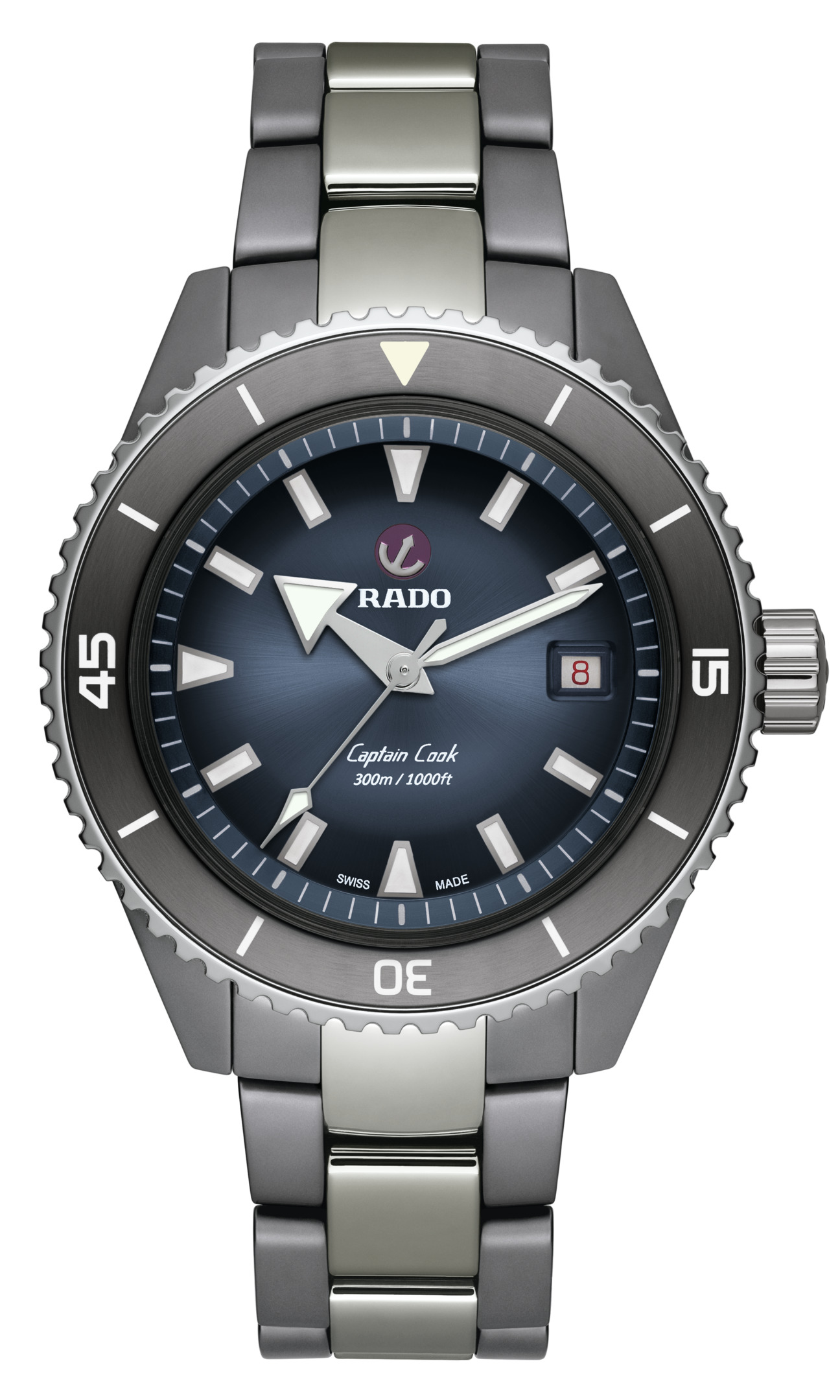
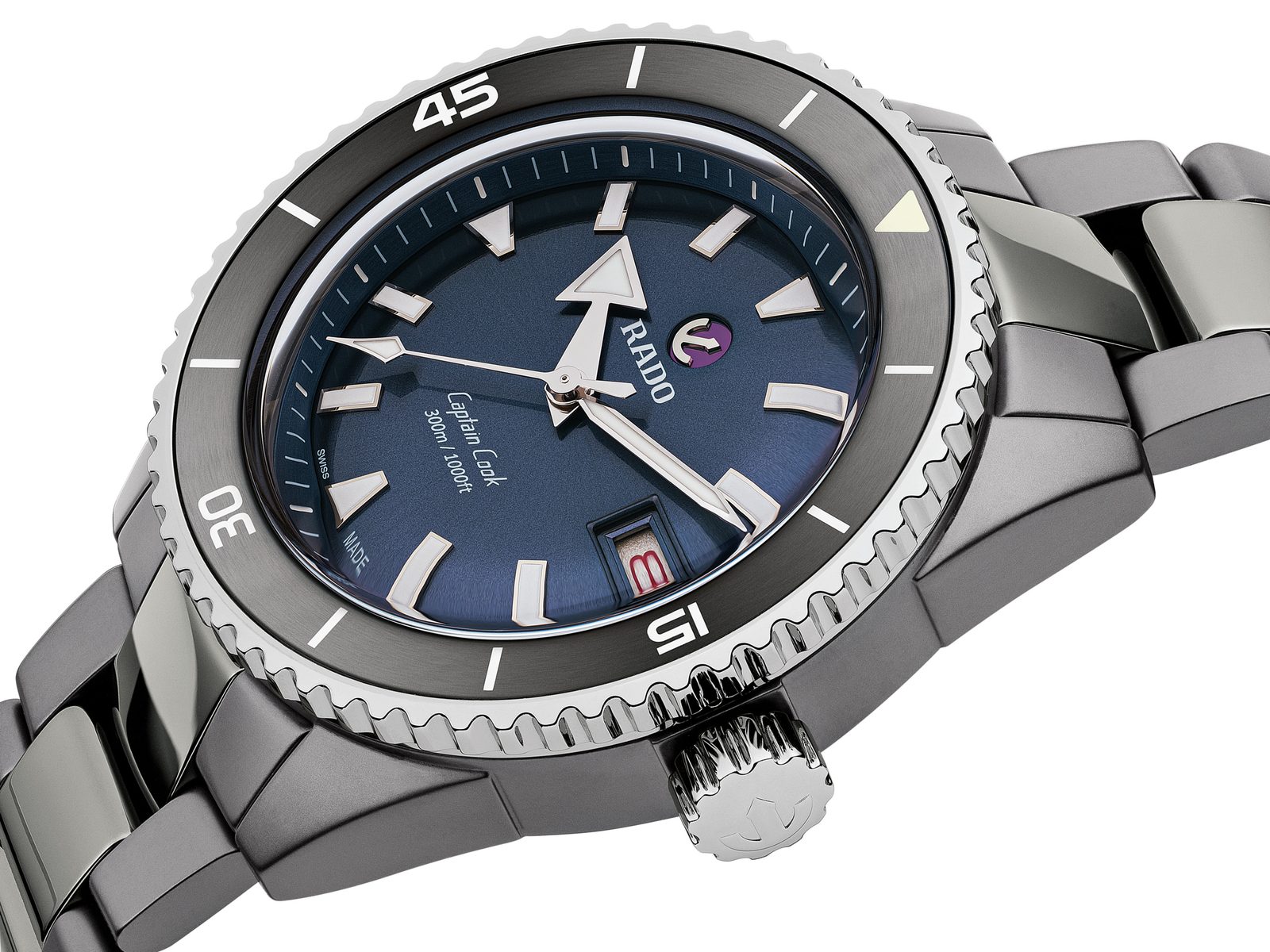
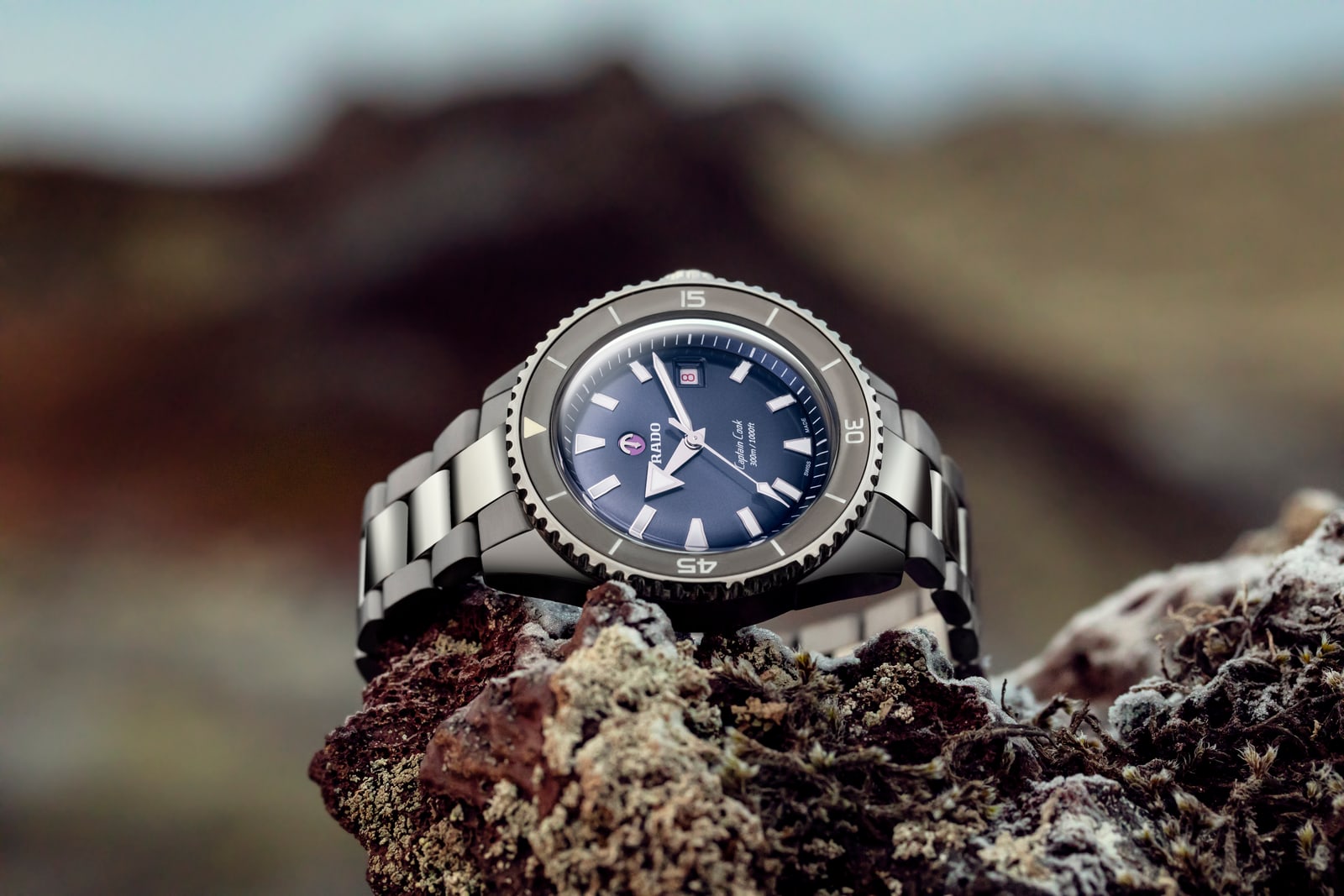
The Rado Captain Cook High-Tech Ceramic Diver is a 43 mm ceramic dive watch with an R734 automatic movement.
Price
$4,250
Material
Ceramic
Grade / type
Plasma ceramic
Water resistance
300 m
- Reference
- R32144202
- Type
- Diver
- Case diameter
- 43.0 mm
- Thickness
- 14.6 mm
- Origin
- Switzerland
- Movement
- Rado automatic, Nivachron hairspring
- Caliber
- R734
- Power reserve
- 80 hours
- Complications
- Time only
- Colour
- Grey
- Construction
- Monobloc
- Finish technology
- Natural finish
- Caseback
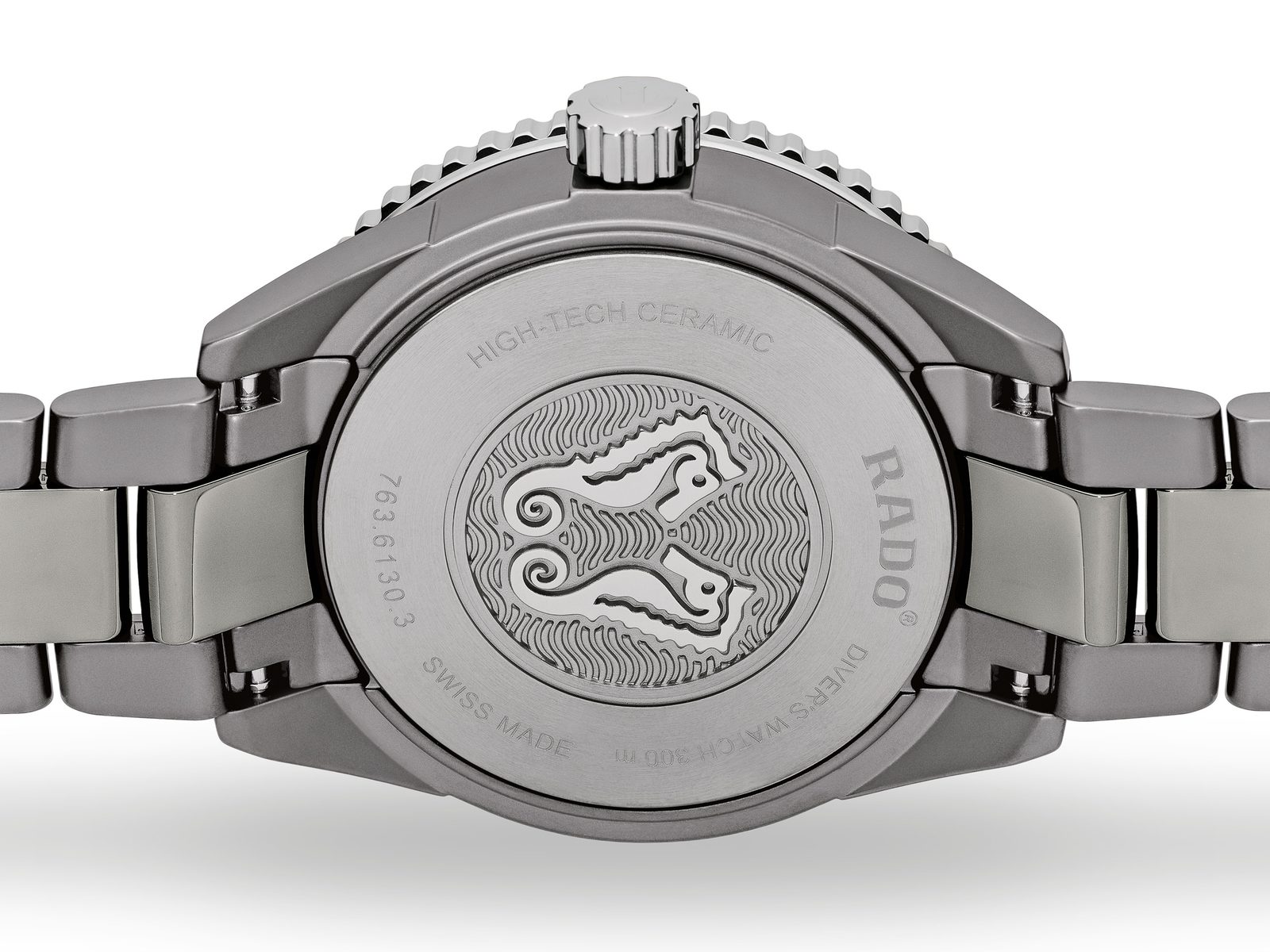
- Titanium
- Nickel-free
- Unconfirmed (bracelet, strap, or clasp hardware not confirmed)
- Bracelet / strap
- Polished plasma high-tech ceramic bracelet
- Matching bracelet
- Standard
- Crystal
- Sapphire
- Display back
- No
- Dial
- Blue
- Dial colours
- Blue
- Lume
- Super-LumiNova
- Availability
- Offered
- Status
- Current
- Not published
- Lug-to-lug, Weight, Hardness, Surface treatment
Facts are free to cite with a link.
Reader reviews & photosContribute photo or review
Browse all watch comparisons →
Similar watches
 DoxaSUB 300 Ti5same category · same style · similar price · similar size
 MTMSilver US-744Xsame category · same style · similar price · similar size
 BallEngineer Hydrocarbon DeepQUEST II Titaniumsame category · same style · similar price · similar size
 NomadicBrú 750same category · same style · similar price · similar sizeSTILMegara Limited Edition (Titanium)same category · same style · similar price · similar size
 MTMXtremesame category · same style · similar price · similar sizeSinnT2 EZM 15 (Titanium)same category · same style · similar price · similar size
 VariusSeeksame category · same style · similar size · similar thickness
Alternatives to the Rado Captain Cook High-Tech Ceramic Diver
 Mühle-GlashütteS.A.R. Mission-Timer TITANsame category · same style · similar price · similar sizeMing18.01 H41 (titanium)same category · same style · similar price · similar size
 TutimaM2 Coastline (titanium)same category · same style · similar price · similar size
 SinnT50 GBDRsame category · same style · similar price · similar size
 YemaMarine 2 CMM.20 (Alain Silberstein Limited Edition)same category · same style · similar price · similar size
 SeikoProspex Marinemaster Professional 600m Titanium (SBDX067)same category · same style · similar price · similar size
More watches from Rado


Frequently asked questions
What is the case of the Rado Captain Cook High-Tech Ceramic Diver made of?
The case is plasma ceramic. That is confirmed against the maker's specification. The caseback is titanium.
What size is the Rado Captain Cook High-Tech Ceramic Diver?
The case is 43 mm across and 14.6 mm thick. It is water resistant to 300 m.
How much does the Rado Captain Cook High-Tech Ceramic Diver cost, and is it available?
It is in production, at a list price of $4,250.
All Rado watches · Diver watches · All 1,960 watches
Learn: Titanium grades · Surface treatments · Why titanium scratches · How to read a spec
How we verify & grade · Image & Trademark Policy · Terms & Conditions · Privacy Policy