Sugess Pilot Master 1963 Bronze
SUPILOT002
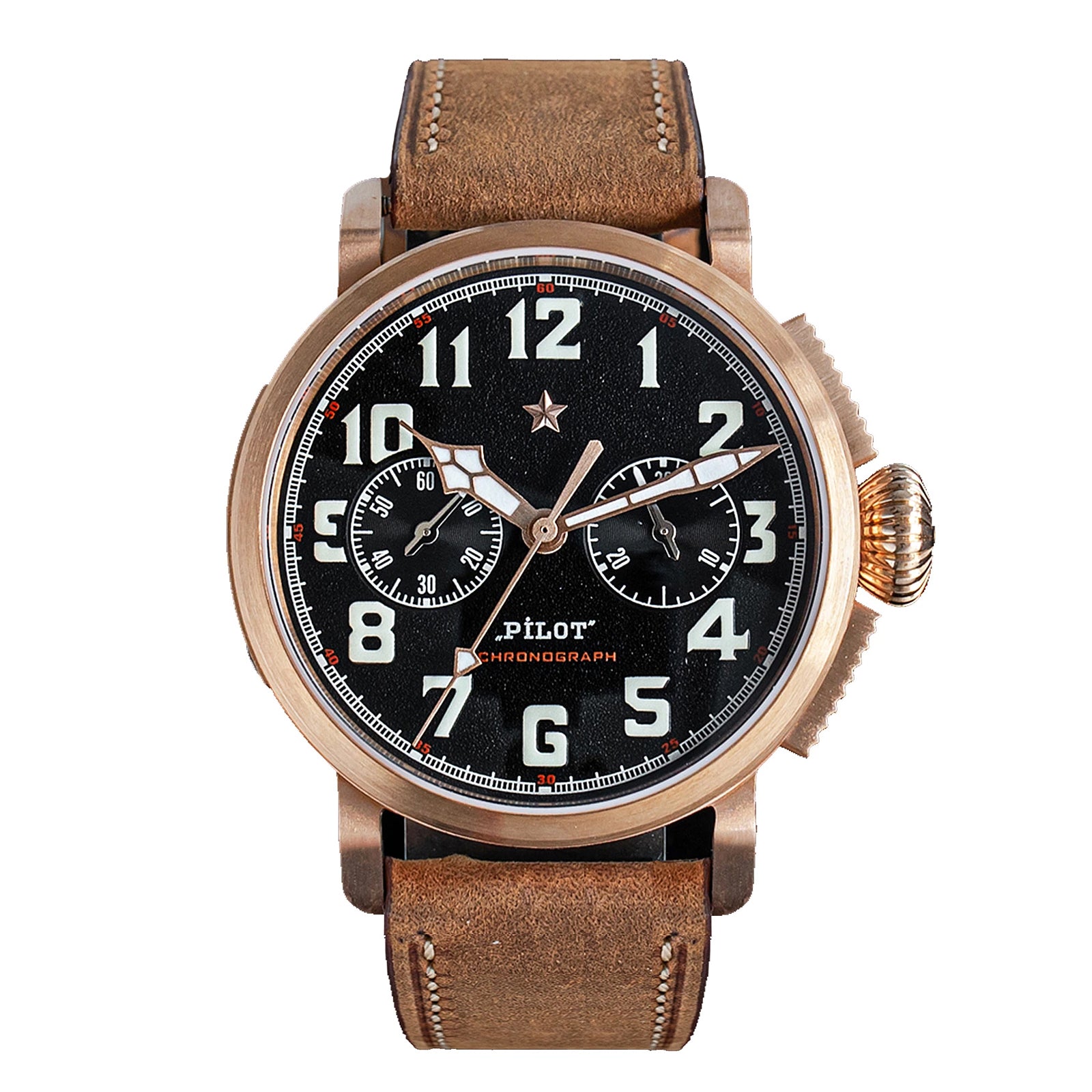
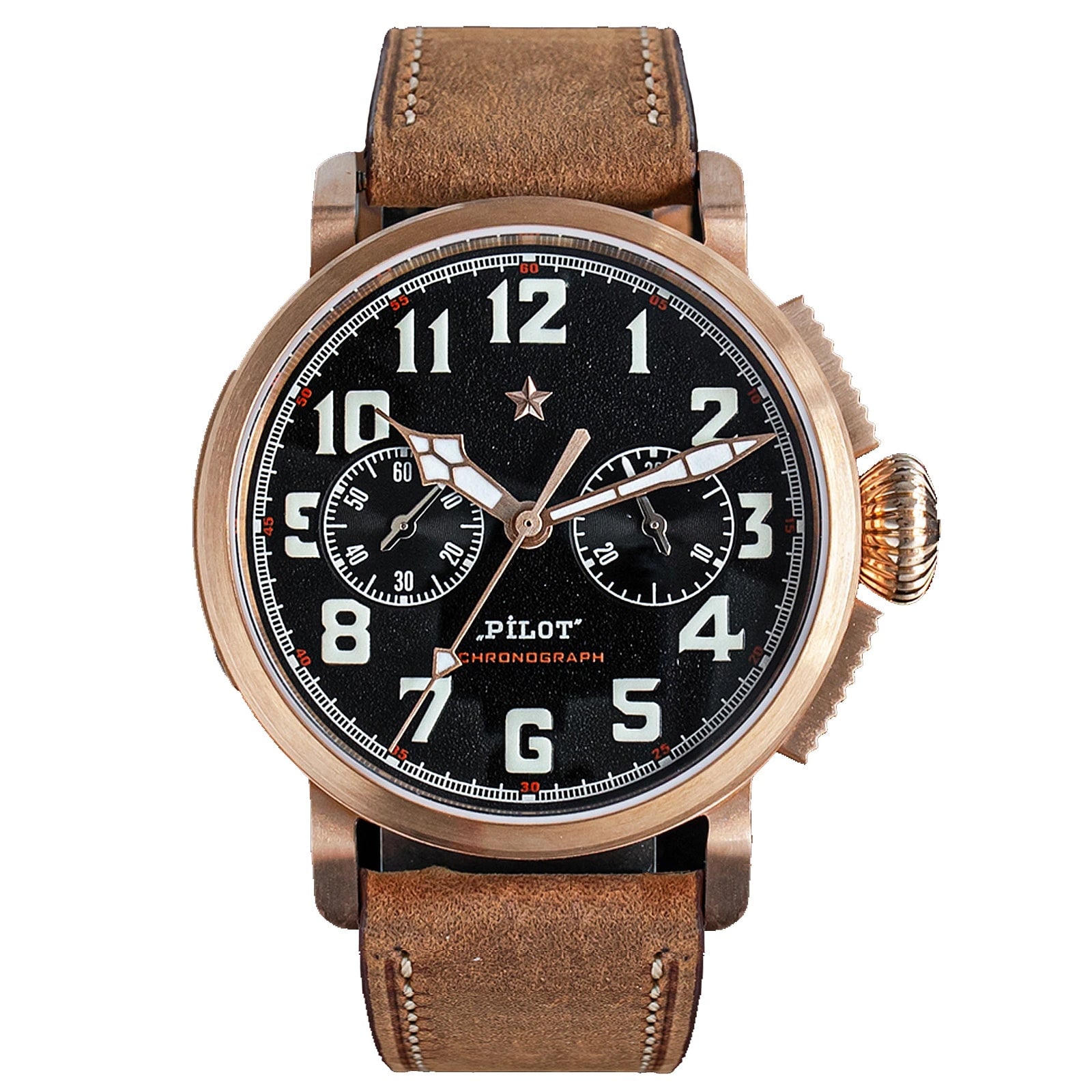
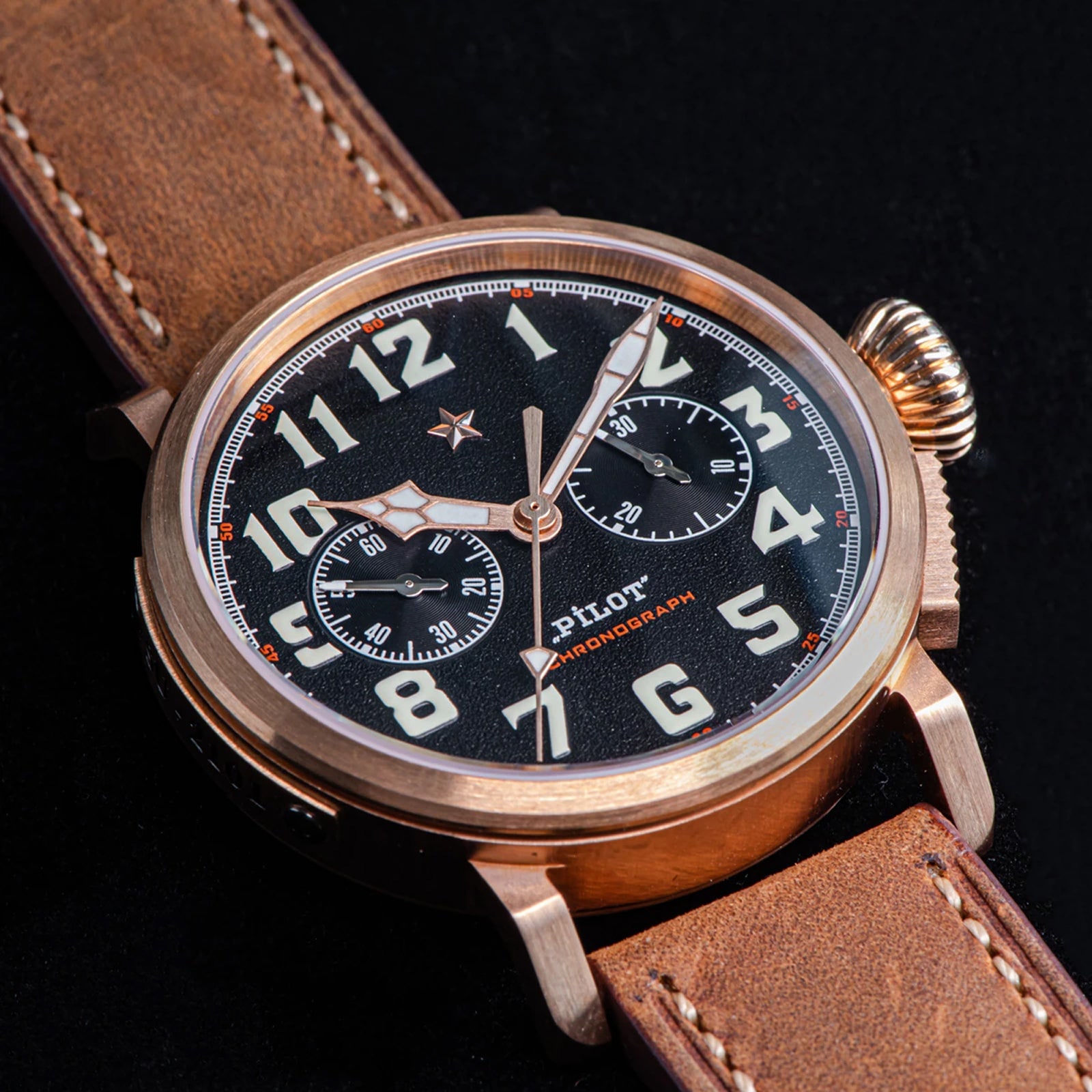
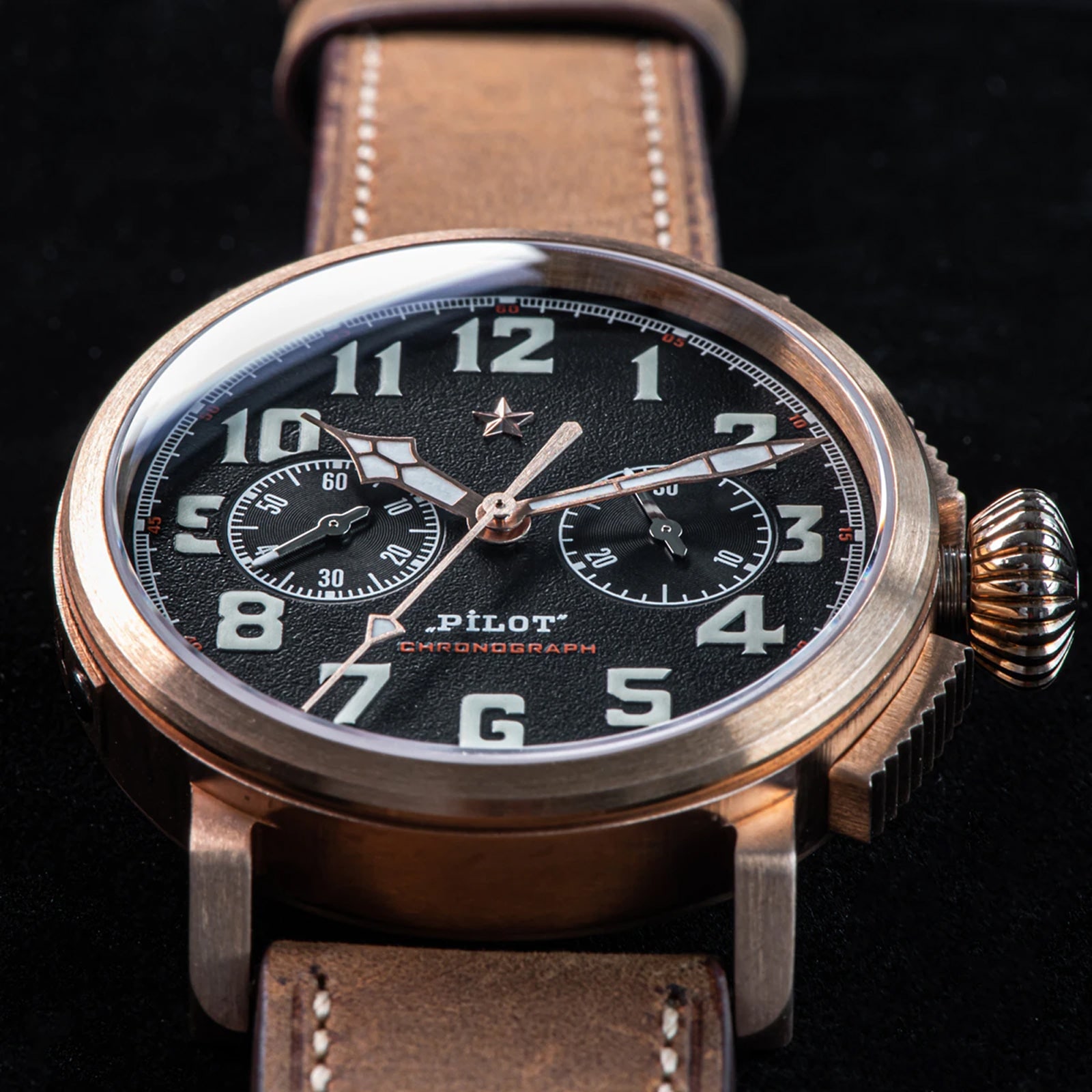
The Sugess Pilot Master 1963 Bronze is a 42 mm bronze chronograph with a Seagull ST1901 hand-wound movement.
Price
$369
Material
Bronze
Grade / type
CuSn8 marine bronze
Water resistance
50 m
- Reference
- SUPILOT002
- Type
- Chronograph
- Case diameter
- 42.0 mm
- Thickness
- 13 mm
- Origin
- China
- Movement
- Manual-wind chronograph
- Caliber
- Seagull ST1901
- Complications
- Chronograph
- Construction
- Assembled
- Finish technology
- Natural finish
- Caseback
- Sapphire
- Nickel-free
- Unconfirmed (bracelet, strap, or clasp hardware not confirmed)
- Bracelet / strap
- Leather strap; sapphire exhibition caseback
- Crystal
- Sapphire
- Display back
- Yes
- Dial
- Black
- Dial colours
- Black
- Lume
- Lumed hands and indices
- Availability
- Offered
- Status
- Current
- Not published
- Lug-to-lug, Weight, Power reserve, Colour, Hardness, Surface treatment, Matching bracelet
Facts are free to cite with a link.
Reader reviews & photosContribute photo or review
Browse all watch comparisons →
Similar watches
 BoldrConquer 2026 LE (Worn & Wound x BOLDR)same category · same style · similar price · similar size
 BoldrConquer LE (Worn & Wound x BOLDR, RTCC 2025)same category · same style · similar price · similar size
 BoldrVenture Velosame category · same style · similar price · similar size
 Tactical FrogTitanium FX-Diving VS75 Solar Chronographsame category · same style · similar price · similar size
 BocciaTitanium 3757same category · same style · similar price · similar size
 DrakenKruger V2same category · same style · similar price · similar size
 BremontAltitude Chronograph Pulsograph Valjoux 23same category · same style · similar size · similar thickness
 Ming20.01 Series 2same category · same style · similar size · similar thickness
Alternatives to the Sugess Pilot Master 1963 Bronze
 BocciaTitanium 3745same category · same style · shared complications · similar price
 BocciaTitanium 3753same category · same style · shared complications · similar price
 BocciaTitanium 3755same category · same style · shared complications · similar price
 BocciaTitanium 3756same category · same style · shared complications · similar price
 BocciaTitanium 3779same category · same style · shared complications · similar price
 AkroneS-05 Titanium Mecaquartz Chronographsame category · same style · shared complications · similar price
More watches from Sugess


Frequently asked questions
What is the case of the Sugess Pilot Master 1963 Bronze made of?
The case is cusn8 marine bronze. That is confirmed against the maker's specification. The caseback is sapphire.
What size is the Sugess Pilot Master 1963 Bronze?
The case is 42 mm across and 13 mm thick. It is water resistant to 50 m.
How much does the Sugess Pilot Master 1963 Bronze cost, and is it available?
It is in production, at a list price of $369.
All Sugess watches · Chronograph watches · All 1,960 watches
Learn: Titanium grades · Surface treatments · Why titanium scratches · How to read a spec
How we verify & grade · Image & Trademark Policy · Terms & Conditions · Privacy Policy