Titanium vs Ceramic Watches
Last updated
Ceramic is the scratch-resistance champion, titanium the all-rounder. In this network's catalogs the difference is measurable rather than theoretical: a median of 82 g for titanium against 107.5 g for ceramic, at the same median case size. Here is how they compare on hardness, weight, brittleness, price and warmth, and why so many watches combine the two.
The short version
High-tech ceramic is far harder than titanium and shrugs off the everyday scratches that titanium can pick up. The catch is brittleness: ceramic can chip or shatter on a hard knock, while titanium dents or marks but stays intact. Titanium is also the lighter of the two and warmer to the touch. Ceramic tends to cost more, though far less than the headline figures suggest once you compare a maker against itself.
How the two materials behave
These are properties of the materials rather than facts about any catalog.
| Property | Titanium | High-tech ceramic |
|---|---|---|
| Scratch resistance | Moderate untreated, high when hardened or coated | Very high, near scratch-proof |
| Impact | Dents or marks but does not crack | Can chip or shatter on a hard knock |
| Warmth | Warms to the skin quickly | Stays cool, very smooth |
| Repair | Can be refinished | Cannot be polished out; replace the part |
| Skin | Hypoallergenic | Inert and hypoallergenic |
How they compare in the catalogs
Measured across every reference in the titanium and ceramic guides, rather than asserted.
| Titanium | Ceramic | |
|---|---|---|
| References | 1,600 | 256 |
| Brands making them | 319 | 42 |
| Median case weight | 82 g (529 of 1,600) | 107.5 g (50 of 256) |
| Median case size | 41 mm | 41 mm |
| Median price | $1,435 | $6,725 |
Two things stand out. Ceramic is a much narrower market: 42 brands make it against 319 for titanium, so choosing ceramic narrows the field a long way before you have picked anything else. And the weight gap is real but smaller than the reputation suggests, roughly 31 percent at the same median case size. Case weight is the worst-published specification in watchmaking, so both figures rest on the minority of references whose maker states one, and the ceramic sample in particular is small.
Scratch resistance versus brittleness
If a pristine, mark-free surface is your top priority, ceramic wins outright. But hardness and toughness are not the same thing. The same hardness that resists scratches makes ceramic less forgiving of impacts, where titanium simply absorbs the hit. Choose ceramic for surface perfection, titanium for resilience.
Titanium can close much of the gap without becoming brittle, because a hardened case is a different proposition from bare metal. That is worth reading before you decide the scratch question settles it: titanium surface treatments.
What ceramic actually costs
Across the catalogs, ceramic references have a median 4.69 times the titanium median, which reads like a steep material premium. Most of that is not the material. Among the 7 brands that price at least 3 references in each, the same maker's ceramic runs about 1 times its own titanium, and only 3 of those 7 charge more for ceramic at all.
The gap between those two numbers is the difference between comparing materials and comparing the companies that use them. Ceramic skews to Swiss maisons and titanium spans everything from microbrands upward, so a catalog-wide median mostly measures who makes what. We took that apart across five materials in The Watch Case Material Report (2026).
The practical version: if you are choosing between two watches from the same maker, expect ceramic to cost a little more, not several times more.
Titanium and ceramic together
Many makers split the difference: a titanium case for lightness and resilience, with a scratch-proof ceramic bezel insert where wear shows most. Others go further with engineered materials such as Ceratanium, a titanium that is ceramicized at the surface, or Panerai Ti-Ceramitech. These keep titanium as the base material and add ceramic hardness, so there is no separate layer to chip off.
53 of the 1,600 titanium references in this guide have a ceramic element of some kind, which makes the hybrid a normal option rather than an exotic one.
Which should you choose
- Choose ceramic if a flawless, scratch-free surface matters most and you are careful about knocks.
- Choose titanium for the lightest watch and the most impact resilience, and because it can be refinished.
- Choose a titanium case with a ceramic bezel for a practical middle ground, or a ceramized titanium such as Ceratanium if you want the hardness without a coating.
Set on ceramic instead? The Wristwatch Field Guide catalogs 256 current-production ceramic watches from 42 brands, verified the same way this guide does titanium, colour by colour, alongside bronze, carbon, tantalum and brass. Ceramized-titanium pieces such as Ceratanium and Ti-Ceramitech appear there too.
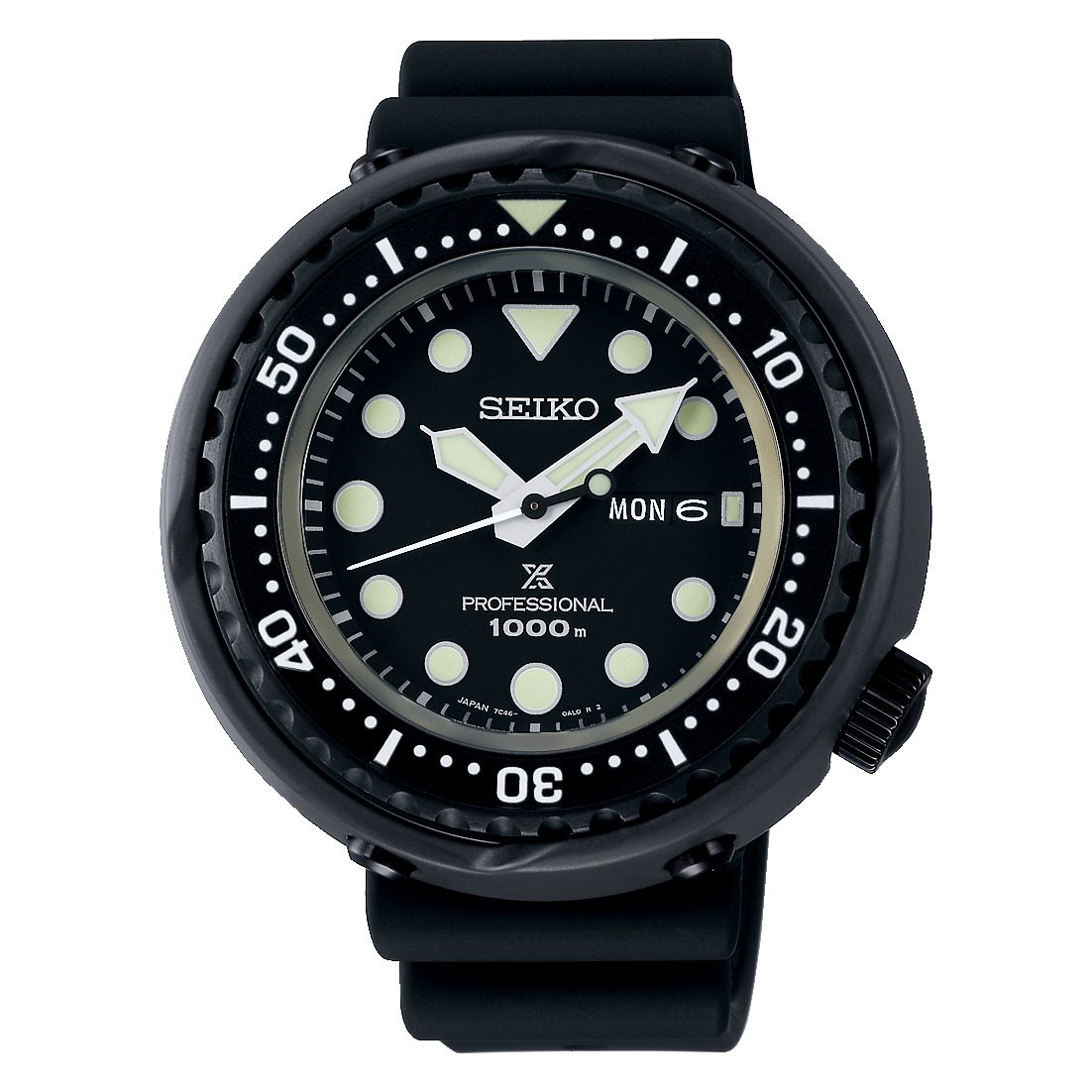
 SeikoProspex Marinemaster Tuna 1000m SBBN047
 PaneraiSubmersible QuarantaQuattro Luna Rossa Ti-Ceramitech
 OmegaSeamaster Aqua Terra 150M Worldtimer (Titanium)
 IWCPilot's Watch Timezoner Top Gun Ceratanium (IW395505)
 MicromilspecPilot Worldtimer
 MidoOcean Star 200C Titanium
Frequently asked questions
Titanium or ceramic for a watch?
Ceramic is extremely scratch resistant but brittle and can crack or shatter on a hard knock. Titanium is lighter, far tougher against impacts, and can be refinished, so it suits daily and tool watches better. Titanium is also the far wider market: 1,600 references from 319 brands against 256 from 42.
Is a ceramic watch heavier than titanium?
Yes, by roughly 31 percent. Median case weight is 82 g for titanium and 107.5 g for ceramic at the same median case size of 41 mm. Case weight is poorly published across the industry, so those medians rest on the 529 titanium and 50 ceramic references whose maker states one.
Is ceramic more expensive than titanium?
Less than it looks. Across the catalogs ceramic references have a median 4.69 times the titanium median, but among the 7 brands that sell both at volume the same maker's ceramic runs about 1 times its own titanium, and only 3 of those 7 charge more for ceramic at all. The headline gap is mostly about which companies use each material rather than the material itself.
Does a ceramic watch scratch?
Barely, in normal wear. High-tech ceramic is far harder than any titanium, hardened or not, so it resists the fine marks titanium picks up. The trade is brittleness: a hard knock that would dent titanium can chip ceramic, and a chipped ceramic part cannot be polished out and has to be replaced.
What is Ceratanium?
IWC's ceramized titanium: a titanium case whose surface is converted to ceramic rather than coated with it. It keeps titanium's light weight and impact resilience while gaining ceramic hardness, and because there is no separate layer there is nothing to chip off. Panerai's Ti-Ceramitech works on the same principle.
Can you get a titanium watch with a ceramic bezel?
Commonly, and it is the usual middle ground. The ceramic goes where wear shows most while the case stays titanium for lightness and repairability. 53 of the 1,600 titanium references in this guide have a ceramic element of some kind.