Titanium vs Steel Watches
Last updated
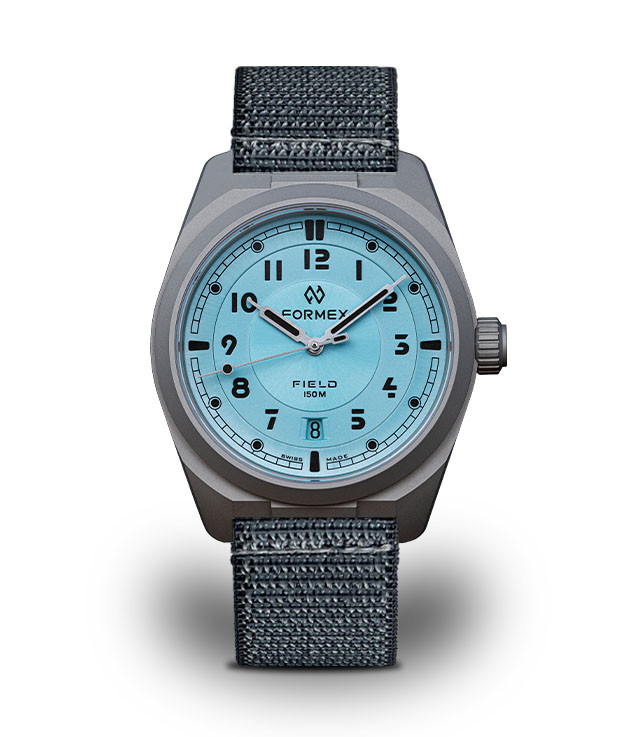
This is the first question most titanium buyers ask. Here is how titanium and stainless steel actually differ on the wrist, across the things you notice day to day: what it weighs, how it marks, how it feels against skin, and what it costs. One caveat up front, because it shapes everything below: this guide catalogs titanium and not steel, so the titanium figures here are measured and the steel ones are properties of the metal.
The short version
Titanium is roughly 40 percent lighter than stainless steel, warmer against the skin, and effectively hypoallergenic. Steel is usually harder at the surface, cheaper to produce, and easy to polish back to new. Neither is simply better; they trade off against each other, and the right pick depends on what you want from the watch.
How the two metals behave
Properties of the materials. The catalog figures come after.
| Property | Titanium | Stainless steel |
|---|---|---|
| Weight | Light, about 40% less than steel | Heavier, more wrist presence |
| Surface hardness | Softer untreated; Grade 5 and hard coatings narrow the gap | Generally harder surface |
| Scratches | Marks more easily untreated; blasted finishes hide it well | Resists fine marks, and polishes out |
| Saltwater | Outstanding, will not rust | Good with 316L, lower grades can spot |
| Skin and nickel | The metal itself carries no nickel | Austenitic grades contain 8 to 14% nickel |
| Warmth | Warms to the skin quickly | Feels cold on the wrist |
| Price | Costlier to machine and finish | Cheaper, the industry default |
Weight is the headline, and the bracelet decides it
The difference you notice first is heft. A titanium dive watch that would be a wrist anchor in steel becomes something you forget you are wearing. For large cases, GMT travellers and all-day wear, this is the main reason people switch.
What the catalog shows is that the case material is only half the story. Titanium references whose makers publish a head-only weight run a median of 56.5 g (77 references), while those quoting a full watch on its bracelet run 95 g (192). The bracelet moves the number further than the case metal does, which is why a titanium case on a heavy steel bracelet can still wear heavy, and why weights are only comparable in the same configuration.
Scratches are the real trade-off
Steel usually has a harder surface, so untreated titanium can pick up fine marks more readily. Two things close the gap: Grade 5 titanium is harder than commercially pure Grade 2, and hardening treatments or coatings raise surface hardness substantially, above steel rather than merely level with it.
How often that applies is the part usually left out. 68 percent of the titanium references here are bare metal, with no hardening and no coating. So for roughly seven watches in ten the comparison with steel is the unflattering one, and it is the remaining 32 percent, the hardened and hard-coated cases, that beat steel outright. If scratch resistance is what is keeping you in steel, the answer is not titanium in general, it is that minority.
Titanium is not the expensive option
Per watch, titanium usually costs a maker more to machine and finish than steel, and that is real. It does not follow that titanium watches are expensive. Of the 1,420 priced references here, 609 are $1,000 or less (43 percent), 374 are $500 or less, and 199 are $250 or less. Titanium spans the whole market, from quartz field watches to haute horlogerie.
The wider point is that a material-to-material price comparison is a harder question than it looks. When we measured it across the five materials we do catalog, most of the apparent price gap between any two turned out to be a fact about which brands use each, not about the metal: within a single maker the gaps mostly collapse. There is no reason to expect steel to behave differently. See The Watch Case Material Report (2026).
Saltwater and skin favour titanium, with one catch
Titanium shrugs off seawater and sweat, which is why it is a favourite for serious dive watches. It is also the stronger choice for nickel-sensitive wearers, because titanium contains no nickel at all while the austenitic stainless steels used in watchmaking contain roughly 8 to 14 percent.
The catch is that a titanium case does not make a nickel-free watch. We record a whole-watch verdict covering every part that touches skin, and of the 432 references where we have verified it, 84 (19 percent) are NOT nickel-free, because a caseback, clasp or bracelet reintroduces steel. 21 references carry an outright steel caseback, which is the part pressed against your wrist all day. If you are buying for a nickel allergy, the case material is not the specification to check.
What this guide cannot tell you
We catalog titanium, not steel, so every titanium figure above is measured across 1,600 references and every steel figure is a property of the metal rather than a survey of steel watches. That is worth stating plainly on a page whose whole subject is a comparison.
Where it bites hardest is price. We can tell you what titanium costs and we cannot tell you what the same watch would cost in steel, and our own cross-material work suggests that even with both catalogs the honest answer would be narrower than people expect.
When steel still makes sense
- You like a heftier, more planted feel on the wrist.
- You want a high mirror polish that stays flawless and can be refinished cheaply.
- You want maximum surface hardness without paying for a hardened or coated case.
- The specific watch you want is only made in steel, which is still most of them.
 CitizenThe Citizen A060 Super Titanium (Washi Dial)
 TudorPelagos FXD
 RZEResolute Pro
 StraumJan Mayen Titanium
 FormexField Automatic (Titanium)
 HamiltonKhaki Field Titanium Auto 38
Frequently asked questions
Is a titanium watch better than a steel one?
It depends on what you want. Titanium is about 40 percent lighter, warmer on the skin, more corrosion resistant, and hypoallergenic. Steel costs less, takes a brighter polish, and in its untreated state is the harder of the two to scratch.
Is titanium more scratch resistant than steel?
Untreated, no; titanium is softer than hardened steel. But surface-hardened titaniums such as Super Titanium or Tegiment-treated cases are far more scratch resistant than ordinary steel. How often that applies matters: 68 percent of the titanium references in this guide are bare metal with no hardening or coating, so for most titanium watches the comparison with steel is the unfavourable one, and it is the remaining 32 percent that beat steel outright.
Are titanium watches more expensive than steel?
Per watch, titanium usually costs a maker more to machine and finish. It does not follow that titanium watches are expensive: 609 of the 1,420 priced references in this guide are $1,000 or less (43 percent) and 199 are $250 or less. We catalog titanium and not steel, so we cannot measure the gap directly, and our cross-material work suggests that most of the apparent price difference between any two case materials is really a difference in which brands use each.
Are titanium watches really hypoallergenic?
Titanium contains no nickel, while the stainless steels used in watchmaking contain roughly 8 to 14 percent, and that is a fact about the metals rather than a promise about a finished watch. A titanium-cased watch can still put steel against your skin through the caseback, clasp or bracelet. Of the 432 references where every skin-contact part has been checked against the maker's specification, 84 (19 percent) carry nickel-bearing steel somewhere. If you are buying for an allergy, ask the maker about the caseback and clasp rather than reading the case material.
Does a titanium watch feel cheap because it is light?
Some people find it does at first, and it is the most common reason a buyer returns to steel. The heft of steel reads as substance to a lot of wrists. It is worth handling one before committing, because this is a preference rather than a quality difference, and it is the one thing in this comparison that specifications cannot tell you.