Titanium Watch Brand Terms
Last updated
Watch brands use many names for titanium and titanium-related materials. Here is what the common ones likely mean, and which are alloys, coatings, treatments, or composites.
Why brands rename titanium
Some brand terms refer to an alloy, some to a coating, some to a surface treatment, some to a titanium-related composite, and some are mostly marketing. The label tells you what to look into; it does not always tell you the exact recipe, which is often undisclosed.
Quick reference
The branded names at a glance: whether each is an alloy, a coating, a surface treatment, or a titanium-ceramic composite, and what it actually is underneath.
| Brand term | Category | What it actually is |
|---|---|---|
| Super Titanium (Citizen) | Alloy plus treatment | Citizen titanium hardened with the Duratect process |
| High-Intensity Titanium (Grand Seiko, Seiko) | Brand alloy | A harder, more scratch-resistant titanium alloy |
| RLX Titanium (Rolex) | Alloy | Rolex's name for the Grade 5 titanium it uses |
| Ceratanium (IWC) | Composite | Titanium ceramicized at the surface, not a conventional case |
| Ti-Ceramitech (Panerai) | Composite | A ceramized-titanium composite, titanium as the base |
| Tegimented titanium (Sinn) | Surface hardening | Titanium hardened in the metal itself, not a coating |
| UltraHex (RZE) | Coating | A hard surface coating, around 1200 HV, on titanium |
| TranTixxii (Casio) | Brand alloy | A Nippon Steel titanium alloy branded for finish and workability |
Common terms decoded
Super Titanium
Citizen titanium combined with its Duratect surface hardening for better scratch resistance and light weight.
View 165 Citizen titanium watches →High-Intensity Titanium
A Grand Seiko titanium alloy promoted as harder and more scratch resistant than ordinary titanium.
View 28 Grand Seiko titanium watches →Titanium with super-hard coating
Seiko titanium finished with a hard surface coating to raise scratch resistance.
View 79 Seiko titanium watches →RLX Titanium
Rolex's name for the Grade 5 titanium it uses on titanium models.
View 2 Rolex titanium watches →Ceratanium
A titanium-based material that is finished to behave like ceramic on the surface. It starts from titanium but is not a conventional titanium case.
View 26 IWC titanium watches →Grade 2 / Grade 5 titanium
Omega uses standard titanium grades, typically Grade 2 or Grade 5 depending on the model.
View 30 Omega titanium watches →Titanium
Tudor uses titanium (commonly Grade 5) on its titanium references.
View 15 Tudor titanium watches →Tegimented titanium
Titanium parts treated with Sinn's Tegiment surface-hardening process, hardening the metal itself rather than coating it.
View 13 Sinn titanium watches →Hardened titanium
Formex applies a case-hardening treatment to its titanium cases for better everyday scratch resistance.
View 13 Formex titanium watches →Hardened cases
Damasko is known for hardened cases. It is included here for context; titanium Damasko references are not catalogued in the guide yet.
Not yet catalogued in the guide.UltraHex
RZE's hard surface coating (around 1200 HV) applied to its titanium watches.
View 11 RZE titanium watches →Titanium
Horage uses titanium on its titanium models; check the individual reference for grade and finish.
View 6 Horage titanium watches →Sandblasted titanium
Bulgari often uses a sandblasted matte finish on titanium, which is a finish rather than a separate material.
View 18 Bulgari titanium watches → Grand SeikoHeritage "Snowflake"
 CitizenThe Citizen A060 Super Titanium (Washi Dial)
 SeikoProspex Shogun SPB189
 ZelosBlacktip 200m Titanium
 RZEFortitude GMT
 CasioMR-G MRG-B2000 Kurogane-iro
 PaneraiSubmersible QuarantaQuattro Luna Rossa Ti-Ceramitech
 IWCPilot's Watch Timezoner Top Gun Ceratanium (IW395505)
 ChopardL.U.C Zagato Lab One Concept
 Ferdinand BerthoudChronometre FB 3SPC.4-1 Ceramised Titanium
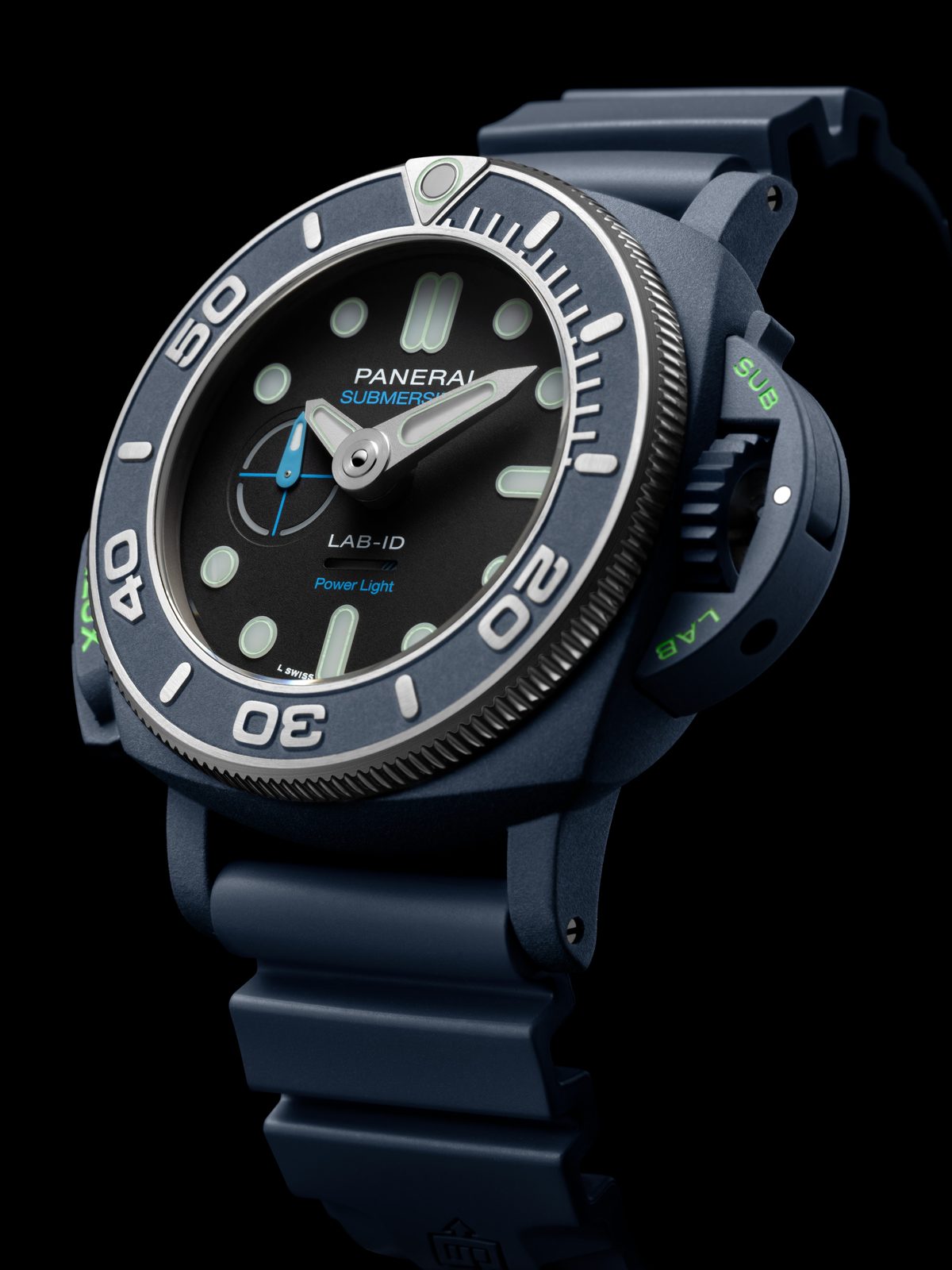
 PaneraiSubmersible Elux LAB-ID
 PaneraiSubmersible QuarantaQuattro Luna Rossa Ti-Ceramitech 44mm (blue)
Not every titanium-related term means a conventional titanium case. Ceramic-titanium composites such as Ceratanium, and coated components, behave differently and are tracked separately in the catalog. Verify with the maker before assuming.
Frequently asked questions
What is the difference between Super Titanium and High-Intensity Titanium?
Both are proprietary hardened titaniums rather than a standard grade. Super Titanium is Citizen's (using Duratect), and High-Intensity Titanium is Seiko and Grand Seiko's. Each resists scratches better than untreated titanium.
Is Ceratanium titanium or ceramic?
Ceratanium, used by IWC, begins as a titanium alloy and is then ceramized at the surface, giving a hard, ceramic-like finish on a titanium base. The guide treats it as a titanium composite.