Titanium vs Carbon Fiber Watches
Last updated
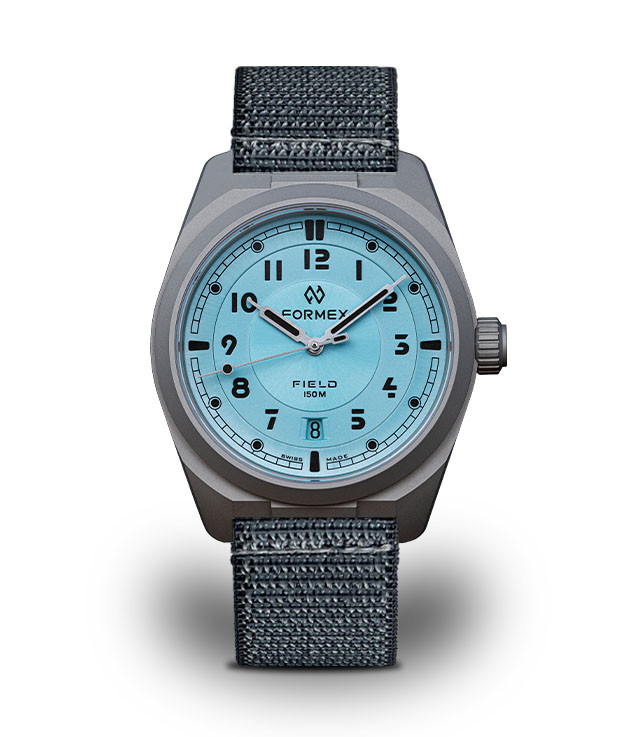
Both chase the same goal, a watch you barely feel, but they get there in opposite ways. Here is how titanium and carbon-composite cases compare on feel, durability, repairability, and what they cost, with the price figures taken from this network's own cross-material study.
The short version
Carbon composites are light and have a distinctive marbled or woven look, but they are a polymer-bound material rather than a metal: they cannot be polished, they can crack or delaminate under hard impact, and the pattern is love-it-or-hate-it. Titanium is a true metal that feels solid, takes knocks without shattering, and can be refinished. Carbon suits outright lightness and looks, titanium the all-round case.
The guide records weights for 18 carbon references against 529 titanium ones, and the medians are closer than the reputation suggests: 95 g for carbon and 82 g for titanium. Carbon does that on a larger median case (44 mm against 41 mm), so size for size it is the lighter material, but the carbon sample is small enough that the gap is worth treating as a direction rather than a figure.
What carbon costs, and why the headline is misleading
Across the catalogs carbon looks far more expensive than titanium: a median of $19,500 over 65 priced references, against $1,435 for titanium, about 13.59 times. That number mostly measures who uses carbon rather than what carbon costs. The 44 brands making carbon cases here are concentrated in motorsport-adjacent sport-luxury and haute horlogerie, so a carbon median is largely a median over those houses.
The usual way to separate the two is to compare a maker against itself, and for carbon this guide cannot. Only 2 brand prices enough references in both materials to support the comparison, so the cross-material study rates the evidence insufficient and publishes no controlled ratio for carbon. That absence is itself the finding: almost nobody sells a carbon line beside a titanium one at volume.
What can be shown is the tightest comparison available, the same maker's same model family offered in both materials. There are only 7 of them, so here they all are.
| Model family | In titanium | In carbon | Carbon vs titanium |
|---|---|---|---|
| Zenith Defy Extreme | $15,300 | $27,500 | 1.8x |
| Bulgari Octo Finissimo Automatic | $16,600 | $28,500 | 1.72x |
| Mido Ocean Star 200C | $1,410 | $2,200 | 1.56x |
| Boldr Odyssey | $799 | $1,200 | 1.5x |
| Bamford London GMT | $2,164 | $2,434.50 | 1.13x |
| Grandeur TorQ Mechanical | $950 | $950 | 1x |
| Bamford London B347 Monopusher Chronograph | $3,381.25 | $3,381.25 | 1x |
The split is the useful part. At the top of the market the carbon version carries a real premium, and those are limited or higher-specification variants where carbon is the point of the edition. At the accessible end the same watch in carbon costs about the same as in titanium, or slightly less, because moulded forged carbon is cheap to produce once the tooling exists. The word carbon covers both, which is why a carbon case tells you little about price on its own.
| Property | Titanium | Carbon composite |
|---|---|---|
| Weight | Very light | Lighter again size for size |
| Feel | Cool then warm, solid metal | Warm, can feel more like a polymer |
| Impact | Dents or marks, stays intact | Can crack or delaminate on a hard hit |
| Look | Uniform metal, grey tones | Marbled or woven pattern, each case unique |
| Repair | Can be refinished | Cannot be polished out |
| Price | Every tier, microbrand to haute horlogerie | Depends on the tier, see the table above |
This guide is a titanium catalog. Forged carbon and carbon-fiber cases (Carbotech, CarbonTech, forged carbon) do not qualify and are excluded. A few watches use a titanium structural case with carbon cladding on the outside; those are included on the titanium basis. See the brand terms guide for how makers name these materials.
When carbon wins
If the lightest possible watch for its size is the goal, or you want the unmistakable forged-carbon look, carbon delivers. It is also highly corrosion-proof and non-magnetic. The catch is availability rather than merit: this network tracks 73 carbon references against 1,600 in titanium, so the choice is narrow and skews expensive.
When titanium wins
For a watch that feels like solid metal, survives daily knocks, can be refinished, and comes at every price from microbrand to haute horlogerie, titanium is the more versatile pick.
 CitizenSlim Super Titanium (AW1900 series)
 RZEResolute Pro
 StraumExpedition
 FormexField Automatic (Titanium)
 HamiltonKhaki Field Titanium Auto 38
 SeikoLukia I Collection Titanium Solar Radio (Gold) (SSQW064)
Frequently asked questions
Is carbon lighter than titanium?
Size for size, yes, though by less than its reputation implies. The median weighed carbon reference here is 95 g against 82 g for titanium, and carbon manages that on a larger median case (44 mm against 41 mm). Only 18 carbon references carry a published weight, so treat it as a direction rather than a precise gap.
Is a carbon watch more expensive than titanium?
Across the catalogs carbon runs about 13.59 times the titanium median ($19,500 against $1,435), but that mostly reflects which brands use carbon rather than the material. Where the same maker offers the same model in both, the accessible ones cost about the same and only the top-tier limited editions carry a real premium.
Why does this guide not catalog carbon watches?
The titanium guide includes a watch only when the case is titanium. Forged carbon and carbon-fibre cases (Carbotech, CarbonTech, Carbon TPT) do not qualify. They are catalogued on the Wristwatch Field Guide instead, alongside ceramic, bronze and tantalum, which is where the cross-material figures on this page come from.
Can a carbon watch case be repaired or polished?
No. A carbon composite case cannot be refinished the way a metal one can, so scratches and delamination are permanent. Titanium can be re-brushed or repolished, which is the practical argument for it on a watch you intend to wear hard.