Is a Titanium Watch Worth It?
Last updated
Titanium usually costs more than steel for the same watch. Here is an honest look at what that premium buys, who it suits, and when steel is the smarter purchase.
What you are paying for
Titanium is harder to machine and finish than steel, so the same model often costs more in titanium. In return you get roughly 40 percent less weight, a hypoallergenic case, excellent corrosion resistance, and a warmer feel on the skin. Whether that is worth it depends entirely on how you wear a watch.
The quick verdict
Match your top priority to the metal. Most of the decision comes down to a single row:
| If your priority is | Lean | Why |
|---|---|---|
| All-day comfort, or a large case | Titanium | About 40% lighter, you stop noticing it |
| Nickel sensitivity or reactive skin | Titanium, with a caveat | The metal contains no nickel, but check the caseback and clasp |
| Saltwater, sweat, the outdoors | Titanium | Effectively immune to corrosion |
| A flawless mirror polish | Steel | Harder surface, and cheap to refinish |
| The lowest price | Steel | Almost always less expensive |
| Maximum surface hardness for less | Steel | Or pay once for hardened titanium |
Titanium is worth it if
- You wear a watch all day and notice weight, especially a larger case.
- You have a nickel sensitivity or react to steel, provided you check the whole watch rather than the case (see below).
- You are hard on watches near saltwater, sweat, or the outdoors.
- You travel and want a do-everything watch that is comfortable on a long flight.
- You simply prefer the muted, non-flashy look of titanium.
Steel might be the smarter buy if
- You want a flawless mirror polish that is cheap to refinish.
- You like a heftier, more planted watch on the wrist.
- Budget is the priority: steel is almost always less expensive.
- You worry about surface scratches and do not want to pay for a hardened coating.
The nickel caveat, before you buy on that basis
Titanium contains no nickel, and that is a real reason to choose it. It does not follow that a titanium watch is nickel-free, because the caseback, clasp, buckle and bracelet links are often a different metal from the case. Of the 432 references here where every part that touches skin has been checked against the maker's specification, 84 (19 percent) carry nickel-bearing steel somewhere, and 21 carry an outright steel caseback.
If you are buying for an allergy rather than for comfort, the case material is the wrong specification to read. Ask the maker about the caseback and the clasp, and treat an unchecked watch as unknown. What the guide holds is a maker's published specification, not a tested watch.
You do not have to overpay
Titanium reaches well below luxury prices. The guide tracks 609 titanium watches at $1,000 or less, 374 of them at $500 or less, starting from the Berny Quartz Titanium Field Watch T2566 at $67.99. You can try titanium without a big outlay.
 SeikoLukia I Collection Titanium Solar Radio (SSQW100)
 RZEValour 38
 CitizenxC Hikari Collection Duratect Amber Yellow (ES9492-57D)
 BertucciA-2T Original Classic
 ZelosSwordfish 42 Titanium
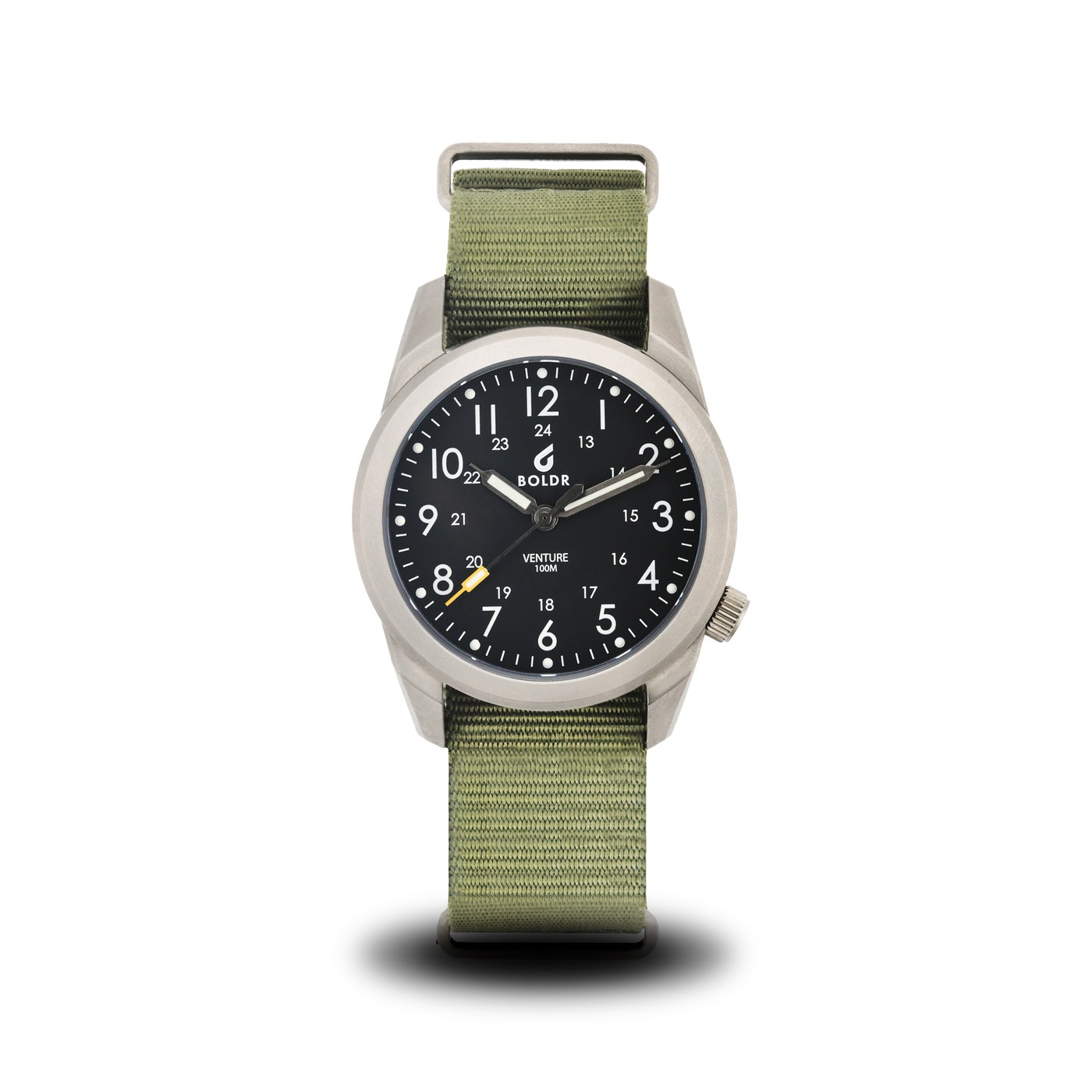
 BoldrVenture Titanium
 CitizenPromaster Land Eco-Drive Radio-Controlled
 RZEResolute Pro
 FormexField Automatic (Titanium)
 HamiltonKhaki Field Titanium Auto 38
 SeikoLukia Liberty Titanium Solar Radio LE (SSQW103)
 BertucciA-4T Super Yankee Illuminated
Frequently asked questions
Is a titanium watch worth the extra cost?
If you value low weight, all-day comfort or corrosion resistance, yes. If you mainly want a mirror-polished shine at the lowest price and rarely notice weight, steel is the smarter buy.
What should I check if I have a nickel allergy?
The parts that are not the case. Titanium itself contains no nickel, and the finished watch may still carry it: of the 432 references here where every skin-contact part has been checked against the maker's specification, 84 (19 percent) carry nickel-bearing steel at the caseback, clasp or bracelet. The guide records what makers publish and tests nothing, so treat an unchecked watch as unknown and put the question to the maker before you buy.
Do titanium watches hold their value?
Resale depends far more on the brand and model than on the metal. That said, titanium versions of sought-after references, such as certain Tudor and Grand Seiko models, can hold value well.